Systems | Development | Analytics | API | Testing

A CFO's Guide to Test Automation: 5 Metrics That Matter

Test automation has evolved far beyond QA. Today, it plays a direct role in product speed, developer efficiency, and even customer retention. That means one thing: it’s no longer just a technical investment. It’s a financial decision. If you’re a CFO, you’ve likely seen test automation mentioned in strategy decks or budget line items. But what does the return really look like?

Is a test management solution a must-have or nice-to-have for facilitating the team?

A test management solution is essential when scale and complexity make it hard to organize work and see what is happening across teams. If you run multiple projects, have many people, and conditions change often, centralizing test cases, results, defects, and requirements gives you a standard process, clear visibility, and better decisions. Smaller, well-organized teams may not need it, but in complex environments it puts order to the chaos.

Accelerating Quality Transformation: How Katalon and QualityKiosk Are Shaping the Future of QA

In a world where digital velocity defines competitiveness, quality can no longer be a bottleneck: it must be a catalyst. To help enterprises scale with confidence, Katalon and QualityKiosk Technologies (QK) have partnered to launch a transformative QA Assessment Initiative. This initiative is designed to benchmark, elevate, and future-proof quality assurance practices across industries.

What sets TestCloud apart when it comes to handling test environments and execution scalability?

TestCloud stands out by provisioning both sides of testing the browsers and devices for your app and the compute to run your scripts. You scale by choosing parallel executions while TestCloud handles capacity, so there is no VM or hardware wrangling. The result is faster setup, elastic cross-browser and mobile runs, and stable execution at high concurrency.

The Strategic Value of Agentic QA

As we wrap this blog series, let’s take a step back. We’ve explored how agentic QA systems can support traditional software testing: one assistant, one workflow, one metric at a time. But what does it all add up to? The answer isn’t “more automation.” It’s more visibility, more alignment, and more confidence across the software delivery lifecycle.

How Much is Manual Regression Costing You Each Quarter?

Manual regression feels simple on the surface. You run your tests again after a code change, check what still works, and you ship. But beneath the surface, it eats time (since manually executing test steps take too much time). It also eats budget, and it quietly slows your release velocity. If you’ve ever thought, “we just need a few days to finish regression,” you’ve likely already paid more than you think. That’s why we created this guide.

Rethinking test automation in BFSI: A playbook in the AI era

One of the key tasks of a finance/banking/insurance QA team is to ensure that defects never slip into production. Automation testing plays a critical role in accomplishing that task. However, now that we have AI, the industry is changing. Fast. Just automation testing is not enough. It should now be augmented by the capabilities of AI. When done right, AI-augmented automation testing is a game-changer for QA teams in finance firms. Here's the playbook to help your team achieve exactly just that.

Katalon Officially Launches Katalon Scout: The AI Quality Companion for the Vibe Coding Era

ATLANTA, GA - October 20, 2025 - Katalon, the global leader in AI-augmented software testing, today announced the official launch of Katalon Scout, an AI Quality Companion designed for the vibe coding era. Built on Amazon Web Services (AWS)’s Agentic AI technologies, Scout enables enterprises to ensure quality at the speed of generative AI development, helping teams build, validate, and deliver software with confidence and precision.

What features make a test management solution effective for all testing types?

An effective test management solution is a single source of truth for manual and automated testing. It centralizes test cases, results, defects, and requirements; enforces a structured process; enables collaboration; provides end-to-end traceability from requirements to defects; and offers robust reporting and analytics so teams can see coverage and progress at a glance. — Cristiano Caetano, VP of Product Management at Katalon.

Katalon Product Roundup September 2025

September brings a powerful wave of innovation across the Katalon Platform, led by the new StudioAssist Agent Mode, AI-driven insights in TestOps, and smarter, more resilient executions in TestCloud. This month’s updates redefine productivity for modern QA teams, helping testers code faster, debug smarter, and execute at scale with confidence.

Compliance & Audit in Agentic QA

As AI-powered agents begin to play a more active role in quality engineering, regulated industries especially in BFSI, healthcare, and government face a critical question: How do you scale agentic QA without losing control, visibility, or auditability? This blog explores how to make agent-augmented QA compliant, explainable, and trustworthy, not just in spirit, but in process, tooling, and evidence. We’re not talking about testing AI systems.

How can we manage and secure test data under regulationsnlike GDPR and CCPA?

Keep test data private by avoiding production data and favoring synthetic data that mimics real patterns. If you must reproduce a production issue, fully anonymize and break any link to personal information, track data provenance, and limit access. Maintain relationships between datasets when generating synthetic records and confirm your software suppliers meet privacy standards. This approach helps teams satisfy GDPR and CCPA while testing effectively.

Agentic QA as a Quality Operating Model

By now, most teams experimenting with AI-augmented testing have started with narrow, tactical use cases: writing test cases faster, summarizing logs, or tagging defects. These are useful — and they build trust in the tech. But true value emerges when you stop thinking of agents as plug-ins, and start thinking of them as a virtual QA team, a set of coordinated roles that evolve how testing is done, how it’s governed, and how it delivers value across the delivery lifecycle.

StudioAssist + MCP: 6 Hands-On Use Cases Every QA Engineer Should Know

The new StudioAssist Agent Mode turns your AI assistant in Katalon Studio into a connected, context-aware testing partner. It now supports MCP Servers, HTTP-based services that let the agent fetch real-time information and perform actions directly inside your project. Katalon ships with two built-in MCP Servers: You can also add your own HTTP-based MCP Servers to extend StudioAssist’s reach. (Note: authentication support is coming soon.)

QualityKiosk and Katalon Launch Co-Lab: A Joint Innovation Lab Driving the Future of AI-Native Test Automation

We are pleased to announce the launch of the QualityKiosk–Katalon Joint Innovation Lab on October 15th, marking a significant milestone in our shared mission to advance the future of test automation and quality engineering. This strategic collaboration between QualityKiosk Technologies and Katalon reflects our commitment to empowering enterprises with prebuilt, next-generation testing and automation solutions designed to enhance agility, efficiency, and innovation.

How can testing integrate into the SDLC to ensure continuous quality without bottlenecks?

Integrating testing into the SDLC is a maturity journey. Start where you are, then move from mostly manual to automation best practices in CI/CD, and finally to pro automation that uses AI and tracks the right metrics. As maturity increases, you ship faster without bottlenecks because tests run in the pipeline and results drive decisions. — Gokul Sridharan, VP of Global Solutions Engineering at Katalon.

Metrics That Matter for Agentic Testing

Traditional test metrics like automation %, pass/fail rates, and defect counts don’t reflect the impact of introducing agents into the QA process. This blog explores a new class of KPIs designed to measure how well your virtual test team is performing including Agent Assist Rate, Human Override Rate, Scenario Coverage Delta, and Review Time Saved.

Designing Your Virtual Test Team

As organizations explore more advanced uses of agentic testing, a compelling vision emerges: a modular virtual test team composed of AI agents, each playing a focused role like Test Architect, Test Designer, Executor, and Summary Agent. While still early in real-world adoption, this model offers a way to coordinate intelligence at scale, with humans guiding the system and autonomy granted based on task risk and maturity.

Do all testers need to learn how to code so they can automate tests?

Not every tester needs to code. Treat automation as part of a wider testing strategy. Keep business and domain expertise front and center to decide what to test, then choose the approach that fits your team low code, record and playback, or full code. This lets domain experts automate without losing the value of their product knowledge, while coders tackle the complex parts.

Augmenting Coverage; Not Just Speed

Agentic testing isn’t just about faster execution - it’s about uncovering what’s missing from your test suite. This blog explores a forward-looking model where AI agents help identify gaps in traditional, deterministic systems through techniques like scenario delta detection, data condition surfacing, edge path exploration, and test case obsolescence tracking.

Get current URL in Selenium using Python: A complete tutorial

When working with web automation in Python, knowing how to get the current URL is essential. It helps you confirm where the browser is, catch unexpected redirects, and make sure your test steps behave as expected. The command driver.get("url") is what takes you to a page. But after that, how do you check if you're on the right one? That’s where driver.current_url comes in.

How can a TCoE standardize testing processes across different projects and teams?

A TCoE standardizes testing by setting a master strategy for the organization, then defining functional and nonfunctional playbooks and drilling into automation standards for UI, API, and mobile. Document locator strategy, object repository management, reusable keywords, and framework choices. With clear standards in place, the TCoE trains its teams and enables project squads to deliver consistently.

How to use the clear() method in Selenium WebDriver with Python?

When writing automated tests with Selenium WebDriver and Python, one common task is dealing with input fields that already contain text. Whether you're working with a login form, a search bar, or a multi-step checkout flow, starting with a clean field helps ensure consistency every time your test runs. The clear() method in Selenium offers a direct way to remove any existing text inside a form field before you input new data.

Should I automate tests for applications that have been around for a while?

For long-lived applications the decision to automate depends on how often they change and how often tests must be re-run. If releases are regular and you need repeated validations, automate the repeatable checks to gain speed and consistency. If the app rarely changes and tests run once in a while, manual can be enough. Choose based on release cadence, rerun frequency, and ROI. — Alex Martins, VP of Strategy at Katalon.

From Scripts to Scenarios - How AI Understands What to Test

Traditional test scripts are too brittle for today’s fast-moving, complex systems. AI-powered agents enable a shift to scenario-based testing - high-level, reusable flows that describe user intent and behavior. Agents can help extract, generate, and evolve these scenarios, while humans guide relevance, risk, and validation. This approach improves stability, cross-platform coverage, and business alignment.

Why AI-native Testing Redefines Quality? Next Steps for QA Leaders

When you think about test automation, what image comes to mind? For many QA leaders, automation still means running the same scripts every night, chasing down false-positives, and fighting maintenance debt. That model served us well for a while, but it was always limited: automation only runs what humans script. The next era is about AI-powered testing. AI-powered testing doesn’t just execute predefined tasks; it generates coverage dynamically, adapting as your application evolves.

Is automation diminishing the craft of testing by overshadowing critical thinking and creativity?

Automation helps you test faster, not smarter. It follows scripts. Skilled testers bring critical thinking, domain knowledge, and creativity to decide what to automate and how. Treat automation as a tool that frees time for “what if” exploration and user-minded checks so quality goes up, not down. — Cristiano Caetano, VP of Product Management at Katalon Learn more Follow Katalon for more insights in our series!

How to refresh a page in Selenium WebDriver?

Refreshing a page might seem simple. But when you're working with dynamic applications, forms, or session-sensitive flows, the way you refresh matters. A mis-timed reload can cause flaky results or unexpected behavior in your automation scripts. That’s why knowing how to refresh the page in Selenium is essential. There are multiple ways to reload a page, and each has its own use case. Some simulate user behavior. Others trigger a full re-render of the DOM.

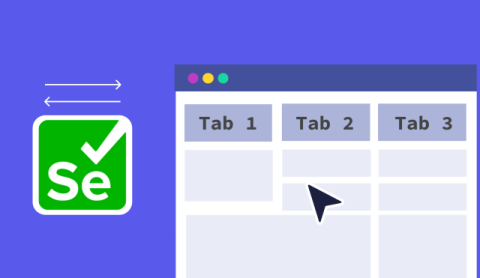
How to switch tabs in Selenium for Python?

Modern websites open new tabs for all sorts of reasons. A login button can trigger a third-party auth flow, or a “Pay Now” link can open a secure payment gateway. When automating such flows, your test script must keep up. That’s where understanding how to switch tabs in Selenium with Python becomes essential. If your script keeps running in the old tab, it’ll miss everything happening in the new one.

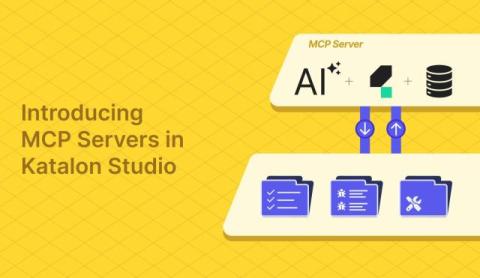
Introducing the MCP Server - Testing Reimagined in Katalon Studio

Hey everyone, Launch days are always exciting, and today, I couldn’t be happier to share something we’ve been working hard on: the MCP Server in Katalon Studio. This isn’t just another update. It’s a milestone for StudioAssist and for all of you who are looking to move faster with AI. With this release, we evolved StudioAssist from simply answering your questions to becoming your Agentic AI assistant. That means it doesn’t just tell you what to do.