Systems | Development | Analytics | API | Testing

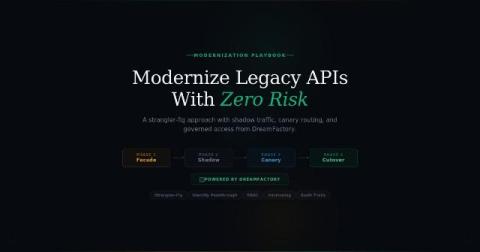
Modernizing Legacy APIs Without a Risky Rewrite: A Step-by-Step Enterprise Playbook

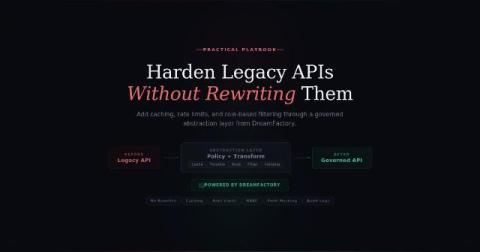
Modernizing fragile, undocumented APIs can feel risky in conservative enterprises. This guide shows how to prove value safely using a strangler-fig approach, traffic controls, and an API abstraction layer. You will learn how to frame a proof of concept, build a governed façade, and incrementally redirect traffic without disrupting production.

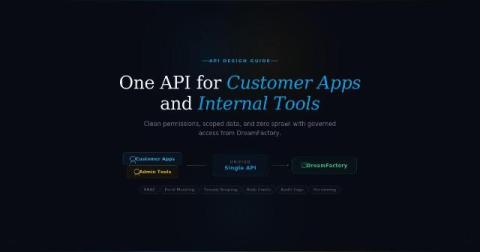
Designing Unified APIs for Customer UIs & Internal Tools with Clean Permissions | DreamFactory

A unified API serves both external users and internal operators from one contract while enforcing different capabilities and data scopes. It centralizes authentication, authorization, validation, and auditing so every consumer follows the same rules. DreamFactory defines this as one surface with segmented access aligned to jobs-to-be-done. The goal is consistent behavior across channels, fewer duplicated services, and easier change management.

Running OpenClaw Responsibly in Production | DreamFactory

OpenClaw adoption is accelerating fast, and so are the security incidents. Within two weeks of broad adoption, over 42,000 gateway instances were found exposed to the public internet with no authentication. Nearly all of them had authentication bypasses. Eight were completely open with full shell access. Meanwhile, 341 malicious skills were confirmed on ClawHub, and infostealers like RedLine and Lumma are already targeting OpenClaw installations to harvest API keys.

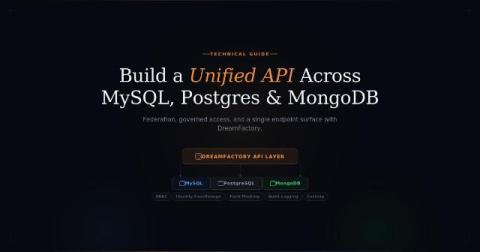
How to Build a Unified API Layer Across MySQL, Postgres & MongoDB with DreamFactory

This guide shows how to create a single API layer that joins data across MySQL, Postgres, and MongoDB using a federated query engine with an API gateway pattern. You will implement a hands-on build, see code samples, and review performance, security, and governance steps. DreamFactory is a secure, self-hosted enterprise data access platform that provides governed API access to any data source, connecting enterprise applications and on-prem LLMs with role-based access and identity passthrough.

Give Claude Access to Your Database and Start a Conversation with Your Data

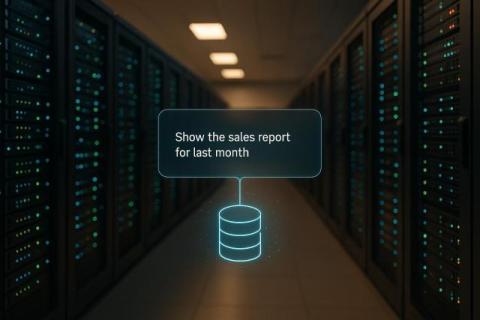
Your database contains thousands of answers. The problem isn't the data—it's that exploring it requires either technical skills or waiting for someone who has them. But what if you could sit down with Claude and just... talk through it? Ask a question. Follow a thread. Go deeper when something looks interesting. This isn't about running queries—it's about having analytical conversations with your own business data, guided by an AI that excels at exactly that kind of thinking.

AI Data Gateways & Data Governance: Scaling Trustworthy LLM Agents

As AI agents move from prototype to production, organizations face a growing paradox: how to give these agents enough access to unlock business value—without compromising privacy, compliance, or control. This isn’t just an integration problem. As soon as you map API layers or ask how a generative agent might retrieve sensitive customer records, the challenge becomes one of governance, scale, and trust.

On-Prem Enterprise Alternatives to Cloud-Hosted AI Dev Tools | DreamFactory

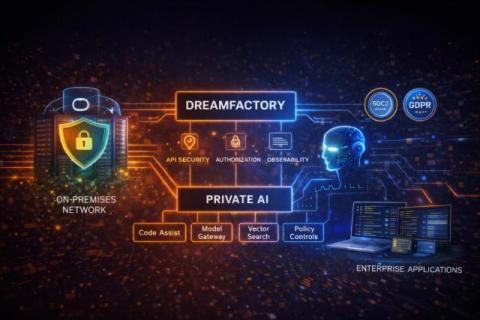
This guide explains how enterprises can replace cloud-hosted AI developer tools with secure, on-prem alternatives. It covers architectures, governance, and selection criteria that meet compliance and performance goals. You will learn how teams stand up private code assistants, model gateways, vector search, and policy controls behind the firewall.

The Hidden Cost of Building Your Own LLM Data Layer

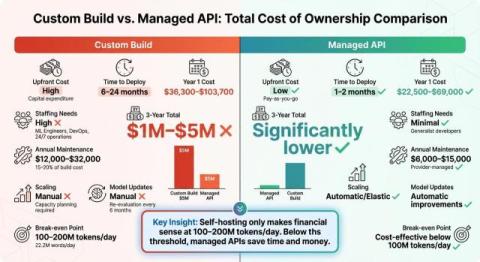
For most businesses, the break-even point for self-hosting only makes sense if processing 100–200 million tokens daily. Otherwise, managed API solutions are more cost-effective, faster to deploy, and easier to maintain. Alternatives like DreamFactory offer pre-built, secure API layers, saving time and money while simplifying enterprise AI integration. Bottom line: Building your own LLM data layer is a major investment with hidden challenges.