Systems | Development | Analytics | API | Testing

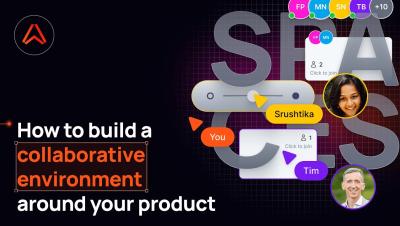
How to build a collaborative environment around your product

What do Microsoft Word and Adobe have in common? Both had their established market spaces completely disrupted by new entrants that brought realtime collaboration to the user experience. Whilst the barrier to entry for adding features akin to Figma, Google Docs, and Miro had been high, it is now possible to build new collaborative applications, or even simply add collaborative features to existing applications - without building the realtime infrastructure.

Creating Collaborative Applications with Ably Spaces

Learn more about Ably's newest Product, Spaces. Spaces makes it easier to build collaboration features such as Avatar Stacks, Shared Cursors, Component Locking, and more. This video is the first in a series of exploring getting started with each of the Spaces features, subscribe to see when the next videos are released.

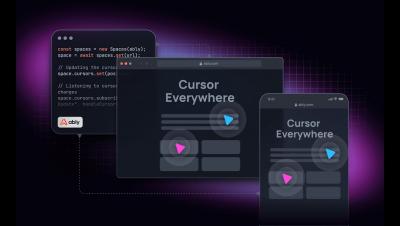
Cursors Everywhere: An experiment on shared cursors for every website

Learn about Ably DevRel Engineer Tom Camp's experience with creating a Chrome Plugin to allow anyone to see one another’s cursors on any web page, and the technical considerations required. About Ably Ably is an enterprise-grade pub/sub messaging platform. We make it easy to efficiently design, quickly ship, and seamlessly scale critical realtime functionality delivered directly to end-users. Every day, we deliver billions of realtime messages to millions of users for thousands of companies.

How to scale WebSockets to millions of connections

WebSockets are hard to scale, it's true. The stateful connection that makes them so powerful for two-way realtime communication also makes them tricky to load balance efficiently, but that isn't to say it can't be done. In this video, Alex Booker (@CodeCast) from Ably runs you through the technical challenges scaling WebSockets before outlining the patterns used to scale WebSockets to thousands of concurrent connections and beyond. Theoretically, the approach to system design outlined in this video can scale to millions of concurrent WebSocket connections in a production environment.

Ably Terraform Provider in Action

The verified Ably Terraform Provider greatly simplifies the provisioning and managing of realtime architectures that include Ably via Terraform, the most popular Infrastructure-as-Code tool on the market. Ably is part of the software architecture of many high-scale cloud-based applications, enabling services and products to deliver complete realtime functionality directly to their end users.

Building a realtime quiz app with AWS & Ably

This video explains the high-level architecture required to support bidirectional low-latency messaging for a realtime application. We use a multiplayer quiz example to explore message flow and implementation, but with minor differences, this could equally apply to other features such as chat, Q&A, or reactions. Jump to: This repository contains a base networking framework for building a realtime quiz platform with Ably. This project uses VueJS on the client-side and NodeJS on the server-side and is scalable as you need.

Visualize Azure serverless workflow progress in realtime with pubsub

A suitable way to update a front-end from back-end processes is to use pubsub over WebSockets. In this video I'll show how to use Ably, a cloud based pubsub service, to visualize the progress of a serverless workflow implemented with Azure Functions and Durable Functions. About Ably Ably is an enterprise-grade pub/sub messaging platform. We make it easy to efficiently design, quickly ship, and seamlessly scale critical realtime functionality delivered directly to end-users. Every day, we deliver billions of realtime messages to millions of users for thousands of companies.

Publish & Subscribe with JavaScript and Ably

The Publish/Subscribe pattern, also known as Pub/Sub, is an architectural design pattern that provides a framework for exchanging messages between publishers and subscribers. The Ably platform makes it very straightforward to implement this pattern and provides guarantees about scalability, reliability, and ordering of messages. Publishers publish messages to a named channel. Subscribers to that channel will then receive those published messages in a totally de-coupled way.