Best of 2021: Fivetran's Year in Review
Dozens of new connectors, partner integrations, security and compliance enhancements — and the Fivetran data models you love.
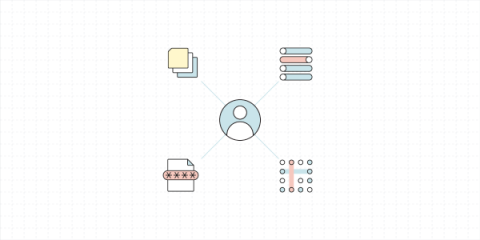
Column masking for PII and other sensitive data is now universally available — including for SaaS apps, files, events and more.
There is hardly an IT application nowadays that doesn’t provide an API, which specifies how this application should interact with the rest of the IT ecosystem. So, it’s no wonder that IT staff even at large enterprises increasingly make use of APIs when they need to integrate multiple systems with each other, commonly new SaaS applications with the existing IT estate. At the same time, there are APIs and then there are APIs.
Easily combine engagement metrics from Facebook, Instagram, Twitter and LinkedIn.
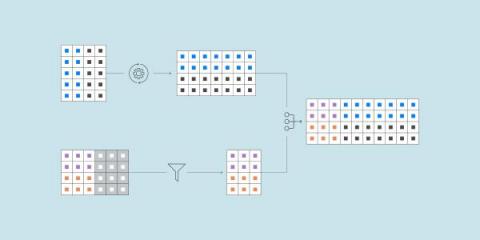
New Fivetran features help data teams jointly orchestrate Fivetran connectors and transformations using dbt Labs’ open-sourced dbt Core* to minimize data latency, monitor ELT pipelines in real time and reduce engineering time.
Market disruptions over the past two years have driven a global surge of mergers and acquisitions. According to Ernst & Young, the first six months of 2021 saw a record $2.6 trillion in M&A activity, obliterating normal levels that hovered around $1.5 trillion per six months prior to the pandemic.
Learn how data integration is the key to a mature analytics practice and more
The Fivetran data models for Shopify Holistic Reporting easily combines Shopify and Klaviyo data into analytic-ready models, helping analysts create a rich portrait of customer personas for marketing and much more.
Dataflow automation platform Prefect brings Fivetran connectors to its open-source orchestration project.
Here’s a story about a developer surviving in a world of APIs, Kubernetes and rapid application modernization. Meet Josh (a pseudonym). Josh is your typical developer. He’s good at writing code in his native language, hates documentation and REALLY hates the “drag and drop” approach to developing software found in bloated API management platforms. Josh would rather write code, weave in some docs and avoid worrying about security, networking, deployment and reliability.