Systems | Development | Analytics | API | Testing

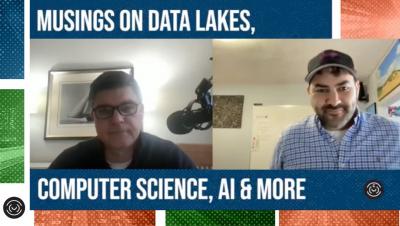
Data Legends Podcast: Musings on Data Lakes, Computer Science, AI & More

When it comes to building new products, there’s a fine line between which pieces of the puzzle should be owned by humans with deep domain knowledge, and which aspects can or should be automated through AI. How far can the boundary be pushed? We speak with Jeremy Foran, Chief Technology Officer at Purple Cow Internet, about his new role as CTO at a fast-growing internet service provider.

Data Lake vs Data Warehouse: 7 Critical Differences

Here are seven key differences between data lakes vs data warehouses: A lot of terms get thrown around in the big data space that every business should understand. Many of these terms are easily confused with each other. This is the case with data lakes vs data warehouses. What are some of the most important differences between them, and how can your business use them most effectively for data analytics and data management? Read on to learn the differences between data lakes and data warehouses.

Building and Managing the Modern Datastore: The Data Lakehouse

The 'data lakehouse' is quickly becoming popular in the data analytics community. Data lakehouse architecture combines the benefits of a data warehouse and a data lake. It aims to merge the data warehouse’s data structure and management features along with the flexibility and relatively low cost of the data lake. Watch this panel discussion to learn how the data lakehouse can address the limitations of the data lake and data warehouse architecture to deliver significant value for organizations. Explore why the data lakehouse is an ideal option for enterprise data storage initiatives.

FinTech Companies Thrive and Innovate with ChaosSearch

ChaosSearch addresses critical pain points and overcomes core operational challenges for FinTech companies, allowing them to accelerate application development and streamline their operations in the cloud. The ChaosSearch data lake platform delivers search and relational analytics at scale directly in Amazon S3, with no data movement, no ETL process, and zero administrative overhead.

Make Your AWS Data Lake Deliver with ChaosSearch (Webinar Highlights)

When CTO James Dixon coined the term “data lake” in 2011, he imagined a single storage repository where organizations could store both structured and unstructured data in their raw format until it was needed for analytics. But without the right storage technology, data governance, or analytical tools, the first data lakes quickly became “data swamps” - morasses of data with no organizational structure and no efficient way to access or extract meaningful insights.

Thinking beyond the Data Warehouse, Data Lake and Data Lakehouse

The Data Warehouse is the heart of any Modern Data Stack. Organization-wide data is essential in order to create a single source of truth. The question here is whether you should build a data warehouse, data lake, or a data lakehouse. Join this session to explore the options that are available and how you can evaluate multiple vendors for your use case.

Snowflake for Data Lakes and Beyond

Organizations are faced with the difficult task of designing architectures to make the most of their data, often resulting in complex systems that are difficult to maintain and scale. Snowflake’s platform supports a variety of data types and workloads at scale, so organizations can easily implement their architectural design pattern of choice, including data lakes, data warehouses, and more. In this session, hear from product managers Saurin Shah and James Malone on Snowflake’s vision for data storage to simplify data architectures, including demos of recent innovations.

Why a Data Lakehouse alone is not the answer to modern analytics

Can the Lakehouse meet all your analytics needs or do you need a Data Lake and a Data Warehouse working in parallel? Join us on this live stream to learn when one works better than the other, or, do you really need the combination to win? Our speakers David, Justin, and Chris will debate the different use cases and architectures to determine what is necessary for a data-driven business.