Systems | Development | Analytics | API | Testing

Automated Data Pipelines for Your Modern Data Needs

Automation has helped countless businesses enjoy improved scalability, accuracy, and efficiency. However, traditional automation is known for its complexity. Setting up automation workflows often requires extensive coding knowledge, advanced technical skills, and a deep understanding of underlying systems. This makes it challenging for non-technical users to independently implement and maintain automation solutions.

Guide to Data Pipeline Architecture for Data Analysts

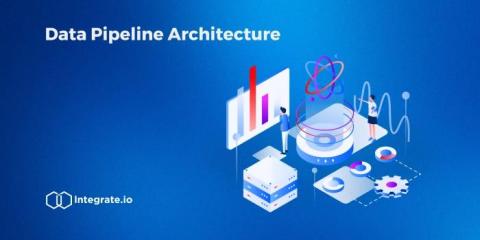
Have you ever spent hours troubleshooting a failed ETL job only to realize the issue was due to poor pipeline design? If so, you're not alone. Data pipeline architecture is the backbone of any data integration process, ensuring data flows efficiently from source to destination while maintaining quality, accuracy, and speed.

Optimize Your AWS Data Lake with Streamsets Data Pipelines and ChaosSearch

Many enterprises face significant challenges when it comes to building data pipelines in AWS, particularly around data ingestion. As data from diverse sources continues to grow exponentially, managing and processing it efficiently in AWS is critical. Without these capabilities, it’s harder to analyze and get any meaning from your data.

From Data Pipeline Automation to Adaptive Data Pipelines

Data pipeline automation plays a central role in integrating and delivering data across systems. The architecture is excellent at handling repetitive, structured tasks, such as extracting, transforming, and loading data in a steady, predictable environment, because the pipelines are built around fixed rules and predefined processes. So, they will continue to work if you maintain the status quo, i.e., as long as your data follows a consistent structure.