Systems | Development | Analytics | API | Testing

Building Customer-Facing Gen AI Applications Effectively & Responsibly - MLOps Live #31 with MongoDB

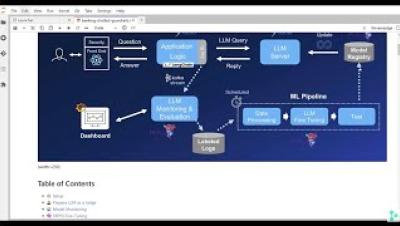
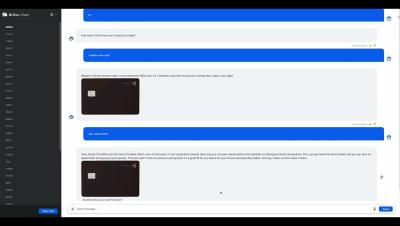
In this session, we explored the unique challenges of implementing gen AI in production environments, when agents are in direct contact with your customers. We shared the Iguazio & MongoDB one-stop-shop solution for building gen AI applications that scale effectively and efficiently, with built-in guardrails and monitoring. We'll show how the end-to-end application lifecycle is addressed – From data management all the way to governance and monitoring in production.

Building and Scaling Gen AI Applications with Simplicity, Performance and Risk Mitigation in Mind Using Iguazio and MongoDB

AI and generative Al can lead to major enterprise advancements and productivity gains. By offering new capabilities, they open up opportunities for enhancing customer engagement, content creation, virtual experts, process automation and optimization, and more.

RAG vs Fine-Tuning: Navigating the Path to Enhanced LLMs

RAG and Fine-Tuning are two prominent LLM customization approaches. While RAG involves providing external and dynamic resources to trained models, fine-tuning involves further training on specialized datasets, altering the model. Each approach can be used for different use cases. In this blog post, we explain each approach, compare the two and recommend when to use them and which pitfalls to avoid.

Commercial vs. Self-Hosted LLMs: A Cost Analysis & How to Choose the Right Ones for You

As can be inferred from their name, foundation models are the foundation upon which developers build AI applications for tasks like language translation, text summarization, sentiment analysis and more. Models such as OpenAI's GPT, Google's Gemini, Meta’s Llama and Anthropic’s Claude, are pre-trained on vast amounts of text data and have the capability to understand and generate human-like language.

Transforming Enterprise Operations with Gen AI

Enterprises are beginning to implement gen AI across use cases, realizing its enormous potential to deliver value. Since we are all charting new technological waters, being mindful of recommended strategies, pitfalls to avoid and lessons learned can assist with the process and help drive business impact and productivity. In this blog post, we provide a number of frameworks that can help enterprises effectively implement and scale gen AI while avoiding risk.

Transforming Enterprise Operations with Gen AI - MLOp Live #29 with McKinsey

In this webinar we discussed the transformative impact of gen AI on enterprise operations, spotlighting advancements across manufacturing, supply chain and procurement. We covered the main gen AI use cases, challenges to be mindful of during implementation and key learnings from client projects; highlighting three main pillars –people, processes and technology.

Future-Proofing Your App: Strategies for Building Long-Lasting Apps

The generative AI industry is changing fast. New models and technologies (Hello GPT-4o) are emerging regularly, each more advanced than the last. This rapid development cycle means that what was cutting-edge a year ago might now be considered outdated. The rate of change demands a culture of continuous learning and technological adaptation.

LLM Validation and Evaluation

LLM evaluation is the process of assessing the performance and capabilities of LLMs. This helps determine how well the model understands and generates language, ensuring that it meets the specific needs of applications. There are multiple ways to perform LLM evaluation, each with different advantages. In this blog post, we explain the role of LLM evaluation in AI lifecycles and the different types of LLM evaluation methods. In the end, we show a demo of a chatbot that was developed with crowdsourcing.