Systems | Development | Analytics | API | Testing

The internal war over who owns AI.

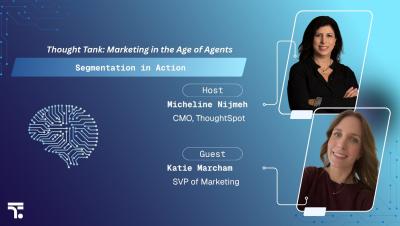
There is a massive boardroom fight happening right now over who gets to control AI. Should it be IT? A centralized lab? The executives? Boris Rabkin from Ligentia drops a truth bomb: AI belongs wherever value is actually created. If your AI strategy is locked inside an isolated corporate lab instead of in the hands of your product, engineering, and customer teams, it’s going to fail. Full episode out now!

Why your AI UX keeps breaking (and what to do about it)

I ran a webinar on this recently and had more to say than the time allowed, so this is the written version: the argument I was making, some context on the demo, and the questions that came up from people watching. The recording is below if you'd rather watch than read. The thesis: AI products are being let down by the user experience, not the model.

The death of the dashboard: why agentic AI is choking on legacy observability tools

Dashboards, sampling, and data lakes were built for human debugging. Closing the bug-to-fix loop for AI agents requires rethinking how runtime data is collected and correlated. Observability as we know it is on its way out. For over a decade, we built telemetry stacks around a single consumer: a human, staring at a dashboard, trying to make sense of a system under stress.

First look: Agents are coming to your favorite SmartBear products

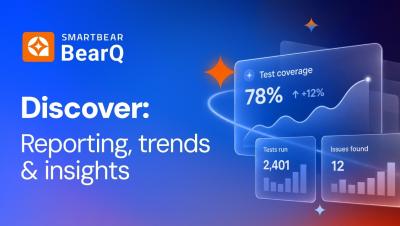
AI is accelerating how teams build and ship software, but validating quality is getting harder, not easier. More AI-generated code means more to test, more API drift to catch, and more documentation that falls behind. The work is growing faster than teams can keep up.

How to Build a Neobank App: A Step-by-Step Engineering Guide

Digital banking is entering a different phase in 2026. Growth is no longer driven by mobile apps alone. It is being driven by embedded finance, AI powered personalization, instant payments, and API driven banking ecosystems. According to BCG, traditional banks are steadily losing ground to fintechs and digital first banking platforms as customer expectations continue to shift toward real time and seamless financial experiences. At the same time, the market is getting crowded.

Introducing AI Transport v0.2.0

Version v0.2.0 of @ably/ai-transport reorganises the SDK to better support a wide range of interaction patterns. Everything in an AI session – input, output, agent lifecycle, control signals – is captured durably, allowing you to easily build the sophisticated interaction patterns that support modern AI user experiences. When we first built @ably/ai-transport, we modelled an AI conversation the way most people first picture it: as a request and a response.

Build Compliant AI Agents With Stateful Stream Processing

The EU AI Act's general provisions are already in force, and high-risk AI system obligations apply from August 2026. The National Institute of Standards and Technology (NIST) AI Risk Management Framework and its Generative AI Profile set the baseline for what auditors expect, framing governance around four functions: identify, measure, manage, and monitor. Deploying artificial intelligence (AI) agents in regulated environments isn't a sandbox experiment anymore. It's a strict governance challenge.

Building a Data Foundation for AI Is a Rewarding Experience

AI runs on data, and global enterprises are awash with petabytes of data. That might suggest that it’s easy for companies to advance their businesses through the power of AI. Yet enterprise data is often fragmented across departmental and technological silos, and that data is often inconsistent, ungoverned and disconnected from mission-critical systems. As a result, many AI initiatives stall before they can deliver operational value, and the root cause is rarely the model.