Systems | Development | Analytics | API | Testing

Modern Software Development For Today's Systems & Applications



Build a BigQuery AI agent with ADK & Cloud Run
In this video, Mazlum Tosun walks Martin Omander through building and deploying an AI data agent. Watch along as the team takes a BigQuery database (the company's data goldmine) and open it for plain English questions, using Agent Development Kit (ADK) and Model Context Protocol (MCP). Resource links: Speakers: Martin Omander, Mazlum Tosun Products Mentioned: BigQuery, Agent Development Kit, Cloud Run.

Beyond Migration: Elevating the SI Role to Strategic AI Architect
For years, the mandate for System Integrators (SIs) was clear: lead the "cloud-first" migration. The promise was lower costs, greater agility, and seamless innovation. But for many enterprise customers, that promise remains unfulfilled. Instead of agility, organizations have inherited a complex, fragmented data estate. Data is siloed across on-premises legacy systems and multiple public clouds, creating governance headaches and inflating infrastructure costs.

The Threats We See. The Risks We Don't
Living in South Florida, I've spent a lot of my career talking to customers about disaster recovery through the lens of hurricanes. Those conversations are easy because everyone understands the threat. We can watch a storm develop for days. Weather stations track every shift in direction. Data centers activate contingency plans. Business continuity teams prepare for impact.

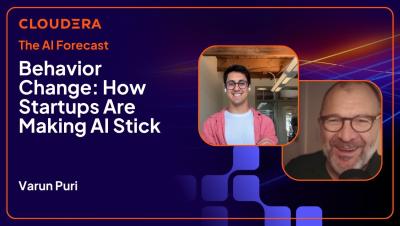
Ep 82 | Behavior Change: How Startups Are Making AI Stick
Behavior change is the biggest hurdle in AI adoption. AI only creates value when people make it part of their everyday work. In this episode of The AI Forecast, Paul Muller sits down with Varun Puri, CEO and co-founder of Yoodli, to discuss why successful AI adoption starts with changing how people work. Drawing on his experience at Google, Google X, and as the founder of an AI startup, Varun shares practical lessons on embedding AI into everyday workflows and building habits that stick.
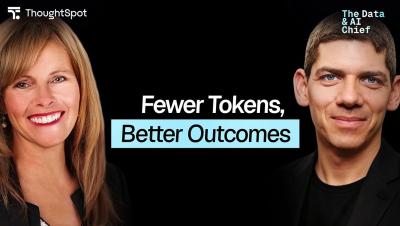
A Google Data Cloud Leader's Formula for Token-Efficient AI
For most enterprises, autonomous AI agents still feel like a risk waiting to happen. Andi Gutmans, Vice President and General Manager for Data Cloud at Google, joins Cindi Howson to explain what it takes to build the data foundation that trustworthy agentic AI depends on. He breaks down how organizations can finally activate the 90 percent of enterprise data that's unstructured, why tokenmaxxing is the wrong way to measure AI value, and how open standards like Apache Iceberg are helping leaders tear down fragmented, multi-cloud data silos and unify data across clouds.

Why Token-Maxxing Is the Wrong Way to Measure AI Success
Silicon Valley has been measuring AI success by token consumption. The more tokens, the more AI transformation. Right? Wrong. Andi Gutmans, Vice President and General Manager for Data Cloud at Google, joins Cindi Howson on the podcast to share that the best context is the context that drives the outcomes you need with the least amount of tokens and processing. Efficiency, not volume, is where the real value is.

Rethinking AI Governance with Lisa Pent #Cloudera #Shorts #AIGovernance #TechRisk
New AI tools are coming out faster than ever, and your employees are working hard to stay at the cutting edge of new technology. Where does governance come into play? Explore how to govern AI without slowing down innovation in the latest episode of The AI Forecast, sponsored by Cloudera.
Level Up Your Column-level Security: Using IAM Data Governance Tags in BigQuery
Learn how to manage column-level access controls in BigQuery using IAM data governance tags, ensuring secure, scalable data classification and protection.