Systems | Development | Analytics | API | Testing

Streaming Data to AI-Ready Tables: Tableflow for Delta Lake and Databricks Unity Catalog Is Now Generally Available

The true power of data emerges when streaming, analytics, and artificial intelligence (AI) connect—transforming real-time streaming data into actionable intelligence. Yet bridging that gap has long been one of the most complex challenges in modern data architecture. Confluent makes it effortless to capture and process continuous streams of data, while Databricks empowers teams to analyze, govern, and apply AI through Unity Catalog.

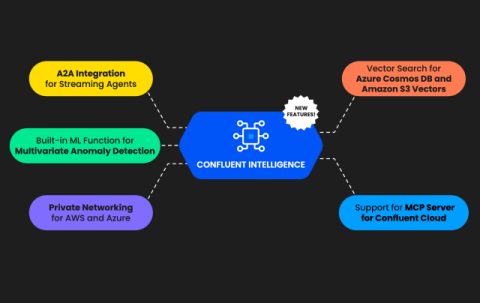
Faster, Smarter, More Context-Aware: What's New in Streaming Agents

When we first introduced Streaming Agents, we were solving a fundamental challenge: Every AI problem is a data problem. When data is missing, stale, or inaccessible, even the most advanced agents and LLMs fail to deliver. How do we build scalable agents that aren’t just powerful in isolation, but part of multi-agent systems that are event-driven, replayable, and grounded in accurate data?

Introducing Real-Time Context Engine: Simplified Context Engineering With Real-Time, Processed Data for AI

We’re excited to announce our Real-Time Context Engine, now available in Early Access. It’s a key part of Confluent Intelligence, our vision to bring real-time data directly to production AI systems through the power of Apache Kafka and Apache Flink.

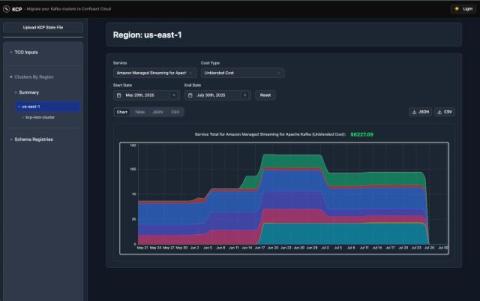
Why Apache Kafka Migration Costs Are Often Underestimated

As a critical, stateful system, migrating Apache Kafka deployments is virtually always a complex engineering project where the most significant expenses are often hidden. Scoping and committing to a Kafka migration requires multiple layers of careful calculation involving infrastructure choices, data complexity, team expertise, and risk tolerance. Underestimating these variables leads to blown budgets and extended timelines.

Introducing Confluent Private Cloud: Cloud-Level Agility for Your Private Infrastructure

If you’re on a platform team running Apache Kafka, you know it’s rarely simple. You’re expected to keep it stable, performant, and secure while juggling requests from every direction. Supporting multiple teams and partners leads to operational complexity that never really goes away.

Tableflow is Production Ready: Delta Lake, Unity Catalog, Azure Early Availability (EA), and More Enterprise-Grade Features

Data-driven organizations know that unlocking real-time analytics from streaming data isn’t just about collecting and transmitting events. It’s about getting high-quality, governed, and query-ready tables into the hands of analysts and business users while ensuring enterprise-grade security and compliance. Traditionally, moving data from Apache Kafka into analytic tables required complex ETL pipelines, manual data wrangling, and custom governance processes.

Unified Stream Manager: Manage and Monitor Apache Kafka Across Environments

If you’re running Confluent Platform or our new offering, Confluent Private Cloud, on-premises, you have your reasons: data sovereignty, regulatory compliance, or maybe a phased cloud migration. Your on-prem Apache Kafka isn’t going anywhere. It’s a critical part of your infrastructure.

Confluent and Your Data: A Partnership You Can Trust

At Confluent, we know that our platform must provide your business with resilience for your mission-critical applications, and we take that responsibility very seriously. Any unplanned outages can result in lost revenue, reputation damage, or fines. As incidents inevitably happen, your organization needs to know how to maximize your availability with our products.

The True Cost of Real-Time Data Streaming

Thanks to ever-increasing adoption technologies like Apache Kafka and Apache Flink, the continuous movement and streaming of real-time data has transformed how modern businesses operate… but is the cost of data streaming worth it? From powering personalized recommendations to enabling instant fraud detection, streaming is often seen as synonymous with innovation and competitive advantage. But like any investment, the cost-benefit equation has to make sense.