Systems | Development | Analytics | API | Testing

How to Use a Continual Learning Pipeline to Maintain High Performances of an AI Model in Production - Guest Blogpost

The algorithm team at WSC Sports faced a challenge. How could our computer vision model, that is working in a dynamic environment, maintain high quality results? Especially as in our case, new data may appear daily and be visually different from the already trained data. Bit of a head-scratcher right? Well, we’ve developed a system that is doing just that and showing exceptional results!
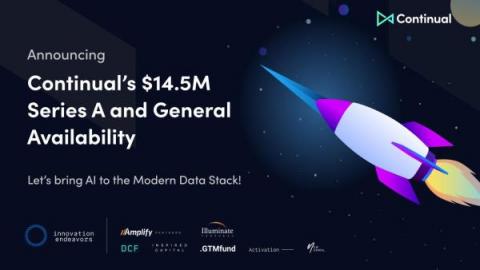

Continual's $14.5M Series A and General Availability

‍ Today, we’re excited to announce the general availability of Continual, the missing AI layer for the modern data stack. We’ve also raised a $14.5M Series A, led by Innovation Endeavors and joined by Amplify Partners, Illuminate Ventures, Inspired Capital, Data Community Fund, Activation, New Normal, GTMfund, and angels Tomer Shiran, the founder of Dremio, and Tristan Handy, the founder of dbt Labs.

Becoming AI-First: How to Get There

Deciding to adopt an AI-first strategy is the easy part. Figuring out how to implement it takes a little more effort. It requires a clear-eyed vision built around well-defined goals and a realistic execution plan. Being AI-first means setting up your organization for the future. By leveraging data, analytics, and automation, a company can gain a better understanding of where it is and where it needs to go.

6 Reasons Why Python Is Best for Apps Using AI, ML and Data Analytics

There are a variety of technology stacks for Artificial intelligence (AI), Machine learning (ML) and data analytics applications. However, the ideal programming language for AI must be powerful, scalable and readable. All three conditions are met by the Python programming language. With outstanding libraries, tools and frameworks for AI, ML and data analytics, Python has proven success leveraging all three technologies.

AI-First Benefits: 5 Real-World Outcomes

Artificial intelligence (AI) has been a focus for research for decades, but has only recently become truly viable. The availability and maturity of automated data collection and analysis systems is making it possible for businesses to implement AI across their entire operations to boost efficiency and agility. AI has the potential to transform operations by improving three fundamental business requirements: process automation, decision-making based on data insights, and customer interaction.

The New Breed: How to Think About Robots

You’ve heard the saying “if you do what you love, you’ll never work a day in your life,” right? Well, I hate to say it, but that’s me. I never dreamed that I would wind up in a field that combined all of my interests, but somehow that happened. Through my research at the MIT Media Lab I get to apply my legal and social sciences background to human-robot interaction. Which yes, does mean that I mostly get to play with robots all day.

Cloud vendor's MLOps or Open source?

If someone had told my 15-years-ago self that I’d become a DevOps engineer, I’d have scratched my head and asked them to repeat that. Back then, of course, applications were either maintained on a dedicated server or (sigh!) installed on end-user machines with little control or flexibility. Today, these paradigms are essentially obsolete; cloud computing is ubiquitous and successful.