Systems | Development | Analytics | API | Testing

Observability For Your Microservices Using Kong, Kubernetes, and Prometheus

In this video, Kevin Chen, Developer Advocate at Kong, will explain how to set up Prometheus monitoring with Kong Gateway to get black box metrics and observability for all of your services deployed on Kubernetes. This guide can also be applied to other solutions like StatsD, Datadog, Graphite, InfluxDB etc.

Supporting Legacy Web Services With Kong

Let’s admit it – web services (SOAP) are here to stay for a few more years, and maybe for a long time in some places where there is no business incentive to rebuild them. However, with a decline in new SOAP web services and most applications moving to cloud native architectures, a common query is “how can we support legacy services while moving to microservices?”

What Are Microservices? What You Need to Know

Microservices are small, independently-running applications that perform a single function for a larger application or IT infrastructure. By loosely connecting a number of them together, developers create a pluggable architecture that facilitates the process of updating, upgrading, and scaling the application in response to changing requirements.

API Trends: From Monolithic to Microservices

A lot has happened in the world of APIs management taking us from Monolithic methods to Microservices. From the agile method to the Internet of Things, software development is full of hot trends. They promise to revolutionize the tech industry for years to come. Some of these trends are truly revolutionary, while others are simply a flash in the pan. Software developers’ tend to chase after shiny objects.

Best Practices for Moving from a Monolith to Microservices

In the first post of this series, we looked at the state of your organization, how to tell if Microservices are right for you, and wrapped up with a few challenges this architecture brings to the table. In this article, we will look at organizational changes that will help you adopt a Microservice architecture. Additionally, we will touch on topics like how to bring change to your organization, how to embrace the primacy effect, and why you should embrace cross-functional teams.

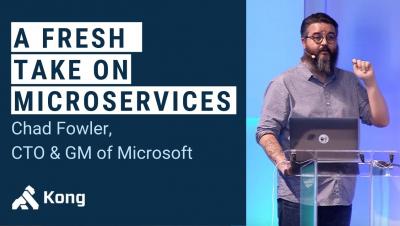
Shrinking to Grow: What Small Can Do for Your Organization - Chad Fowler CTO & GM, Microsoft

During his talk, Chad outlined how almost everything we've seen in the evolution of software and systems points to one, fundamental truth: small things are more manageable than big things. Small iterations are better iterations. Small methods are better methods. Small teams are better teams. He discussed examples from sociology, psychology, and biology that explored how we can think small to build systems and organizations that can outlive us.

Microservices: Decomposing Applications for Testability and Deployability by Chris Richardson

In this presentation, Chris Richardson describes the essential characteristics of the microservice architecture. You will learn about the benefits and drawbacks of the microservice architecture and when it makes sense to use it. Chris also covers how the microservice architecture is not a silver bullet.

Got microservices? Service mesh management might not be enough

A lot of enterprises are evolving their monolithic applications into microservices architectures. In this pattern, applications are composed of fine-grained services that communicate via APIs. Microservices promise, faster development, innovation, cloud scaling, better infrastructure optimization—and happier developers. No wonder this architecture gets so much attention.

10 Ways Microservices Create New Security Challenges

In the current microservices DevOps environment, there are tough new and evolving challenges for developers and teams to consider on top of the more traditional ones. From worsening versions of already common threats to new-generation evolving threats, new perspectives are required on securing microservices. These new perspectives may not be intuitive for many otherwise sophisticated DevOps and data teams.

Cargill Bridges Legacy and Cloud Native with Kong Enterprise

As we continue to expand across new industries and regions, we’re excited to share Cargill’s digital transformation story and how it turned to Kong Enterprise to create a unified API platform across existing legacy and newer cloud native systems. We talked to Jason Walker, senior enterprise architect at Cargill, about their journey to microservices. What was the driver for Cargill’s move to microservices?