Systems | Development | Analytics | API | Testing

Marketing Root Cause Analysis: Using AI to Diagnose Why Performance Dropped (and What It Leaves Out)

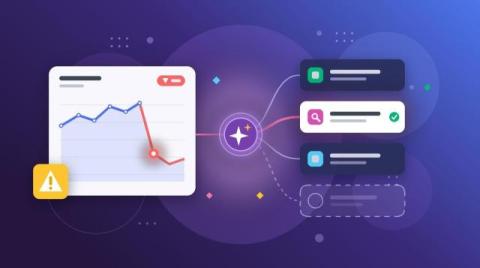
Your dashboard already told you ROAS dropped. The expensive question is why, and answering it means correlating data across platforms, isolating variables, and testing hypotheses against the numbers. Done by hand, that is an afternoon per incident. Done by AI, it takes seconds, with one catch.

Top Automated Testing Platforms for AI-Driven Software Development

AI-driven software development has reshaped what QA teams face daily. Codebases evolve faster, release cycles are shorter, and a single missed regression can hit production within hours. Today's top automated testing platforms have moved well past scripted checks, they now use machine learning to write, maintain, and adapt tests on their own. The five platforms below represent where the market stands in 2026, chosen for their AI architecture, enterprise track record, and real documented results.

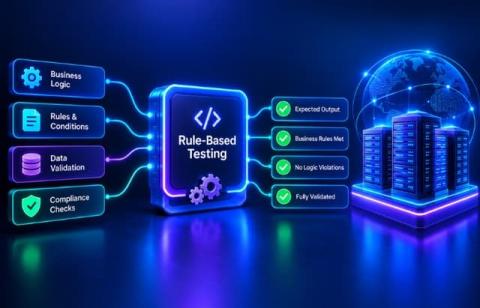
Why Deterministic Rule-Based Testing Unlocks Enterprise Logic Scale

Modern enterprise applications process millions of calculations daily, checking vast combinations of transactional parameters, localized regulations, and internal security architectures. Relying on basic exploratory methods or loosely defined scripts creates severe validation gaps, making structured QA testing and rule-based testing essential for preventing system failure.

Data-Driven Testing in Katalon Studio: From Requirement to Bound Test Suite in One Prompt

Data-driven testing turns one test case into many: one script, one data file, one iteration per row. Katalon AI Assistant already writes your test cases and test data in minutes. Binding them together, though, was still a manual job that could take far longer. In Katalon Studio 11.6, the assistant does that part too.

Accounts Payable Metrics: 10 KPIs to Track, with Formulas and Benchmarks

Accounts payable metrics are the numbers a finance team uses to judge how well AP is working. They show what each invoice costs to process, how fast and accurately it moves to payment, and how well payments are timed. The most useful accounts payable performance metrics fall into five families: cost, productivity, speed, quality, and cash. These metrics apply whether invoices are keyed by hand or captured with accounts payable automation. No single number tells you whether AP is healthy.

SaaS or on-premise? How to settle the Swagger deployment question

Choosing between SaaS and on-premise for SmartBear Swagger Studio, SmartBear Swagger Portal, and SmartBear Swagger Contract Testing The question that most often stalls an API solution evaluation is a simple one: do we run this as SaaS or on-premise? It’s simple to ask and hard to answer, because three teams each hold a veto. Security needs to know where your data will live. Your platform team has to decide whether it can take on another workload.

The Node.js Release Schedule Is Changing

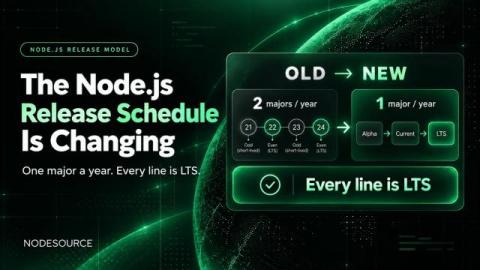
One major per year, every major headed for LTS, and a new Alpha phase: here’s why Node.js is changing a release model that has been in place for more than a decade. For more than ten years, Node.js releases have followed a rhythm that became familiar across the ecosystem: a new major every six months, even-numbered releases moving into Long-Term Support, and odd-numbered releases serving as shorter-lived Current lines. That model brought something Node.js badly needed in 2015: predictability.

Healthcare IAM Trends: What's Shaping Identity Security in 2026

‍Healthcare identity and access management (IAM) controls access to clinical systems and patient information. It governs authentication, authorization, account provisioning, and access removal across connected healthcare environments. Healthcare IAM trends reflect expanding access requirements across employees, vendors, applications, and AI agents. Each identity needs defined permissions, accountable ownership, and monitoring appropriate to its operational role.

What Is a Control Plane for Enterprise AI? A Look Inside Klique

A control plane for enterprise AI is the layer between the people and agents using AI and the infrastructure that runs it, meaning your models, GPUs, clusters, and cloud accounts. It decides who can use what, sends each request to the right resource, and records what that request cost. Klique is the control plane for enterprise AI. Teams get self-service access to approved tools, models, and GPUs, and IT sets the policies, quotas, and budgets behind them.