

Systems | Development | Analytics | API | Testing

Dissecting Rails Migrations: Anatomy, Rollbacks, and Errors (Rails 8.1)

A Rails migration is a timestamped Ruby class inheriting from ActiveRecord::Migration whose change method alters the database schema. bin/rails db:migrate runs each pending migration once, records its version in the schema_migrations table, and dumps the result to db/schema.rb. Rollbacks invert change; irreversible steps need up and down. On PostgreSQL and SQLite, each migration runs inside a transaction.

Optimize Database Connection Pools for Peak Performance

When scaling an application to handle higher traffic, performance stalls or database errors often trace back to database connection pools running on default or generic settings that buckle under real-world load. The result? Connection timeouts, resource exhaustion, and users facing delays while the backend struggles. Establishing a new database connection can take 50 to 100 milliseconds per request, and multiplying that overhead by thousands of concurrent users can overwhelm infrastructure.

Connect Replit to On-Prem SQL Server

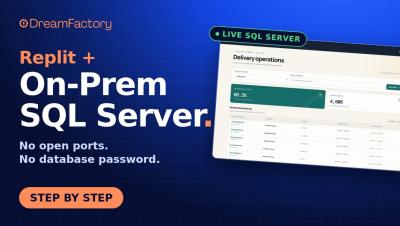
Connect Replit to an on-prem SQL Server database without opening a single firewall port or handing over a database password. In this video I put DreamFactory in front of a SQL Server database on my local network, generate a REST API from it, lock that API down with a read-only role and a scoped API key, then I have Replit build a live delivery operations dashboard on top of it. Replit calls the API from the app's backend, so the key never reaches the browser.

Load Test PostgreSQL Instantly using Production Recordings

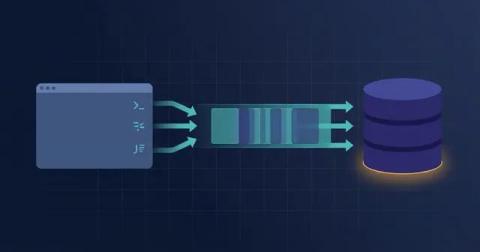
The first PostgreSQL post ran on a laptop: a demo app, a Docker container, and the proxymock CLI. That is the fastest way to see the idea. It is also not where your database problems live. Your real query mix lives in the cluster, where a Java service with a connection pool, an ORM and a schema migration tool sends the statements nobody wrote by hand. This post deploys an open source banking app to Kubernetes and records the queries one of its services sends to PostgreSQL.

How to Build an Effective Database Testing Strategy for Reliable Releases

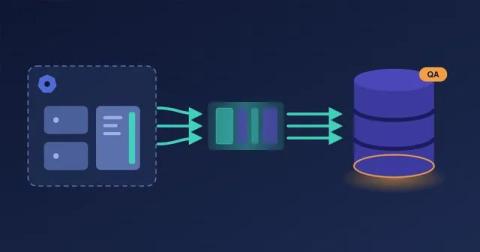
Green build pipelines lie. Your automated unit suites can execute without a single failure, API contracts can validate cleanly, and browser regression sweeps can pass with pristine checkmarks. Yet the moment a release hits production, software must interact with state. A single unindexed foreign key, an overlooked lock escalation on a high-throughput table, or an uncalibrated default constraint will bring an entire platform to a halt while your CI dashboards remain reassuringly green.

Test Your MySQL 8.4 Upgrade With Real App Queries

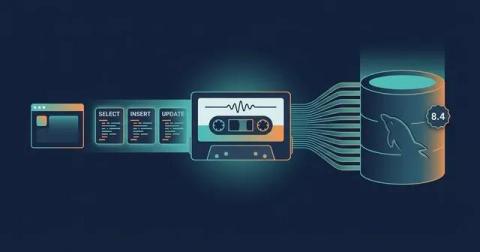
Before you start, paste this into Claude Code, Cursor, Codex, Gemini CLI, Kiro, or any assistant that can read a URL and run commands: The install-speedscale skill installs proxymock for your operating system and walks you through proxymock init. It stops when you need to complete browser sign-in, keeps your recordings on your machine, and connects the proxymock MCP server so your assistant can run the prompts later in this article.

Test PostgreSQL With the Queries Your App Actually Runs

The first number from my local PostgreSQL 16 test was roughly 1,600 statements per second. It looked impressive. It was also the least useful result in the run. The useful part was the workload. It came from queries the demo app had actually sent: the same prepared statements, parameters, reads and writes. A synthetic benchmark tells you how PostgreSQL handles a synthetic workload. It does not tell you whether your migration just broke the UPDATE your app depends on.

SQL-Shaped Intent: The Engineering Behind AgentQL

Our CEO recently wrote reaffirming an architectural decision ThoughtSpot made when LLMs first emerged: we do not use LLMs to directly generate SQL. My team has spent the better part of a year building AgentQL: a capability that doubles down on our decision. So let me explain what we actually built, why it doesn't just honor that architectural decision but depends on it, and the engineering choices underneath.

Pre-built Oracle test cases can't replace a test automation strategy

Pre-built Oracle test cases have become an increasingly popular resource as organizations look for faster ways to scale test automation. The appeal is understandable: reusable assets and templates can help teams accelerate onboarding and reduce the effort required to begin automation initiatives. Tricentis offers an Oracle test case library as a reference framework rather than an instant, maintenance-free automation solution.