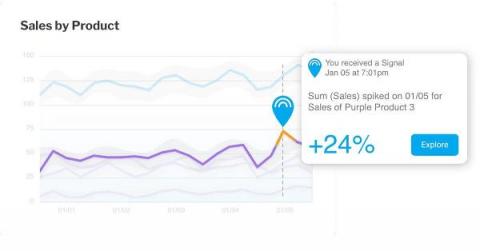
One of the big trends we’ve seen this year is organizations going direct to consumer. Manufacturers who sold through retail outlets are moving online, and as a result a huge amount of digital transformation is occurring. A customer of ours has done exactly that. Kyowa is a Japanese cosmetics and health food company and they’ve moved from retail to online and digital, and Yellowfin has been a significant part of that journey. In particular, they’ve used Signals.
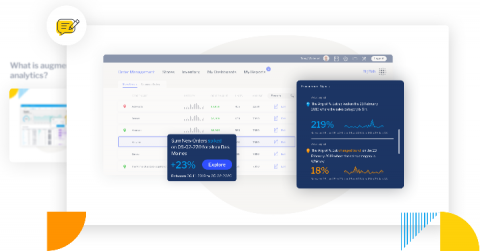
Augmented analytics uses emerging technologies like automation, artificial intelligence (AI), machine learning (ML) and natural language generation (NLG) to automate data manipulation, monitoring and analysis tasks and enhance data literacy. In our previous blog, we covered what augmented analytics actually is and what it really means for modern business intelligence.
I've been an avid watcher of COVID stats in Victoria because it has a real outcome for us - it tells us when we'll come out of lockdown. From this, I’ve had three take outs about how not to manage with data.
Historically, analytics has not always been a priority feature for software vendors. Many applications typically are built with analytics bolted-on later, as standalone tools. But the changing needs of today’s business users has accelerated the importance of providing in-built ways to monitor and explore their data while they use your software.
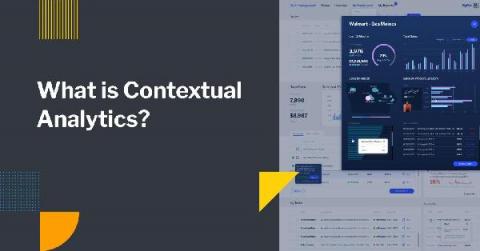
As a specialized and mature form of embedded analytics, contextual analytics is a game-changer if you're a software vendor looking to further augment your customers’ user experience, without requiring developers to completely reengineer your offering. Contextual analytics blends the data your users need for decision-making right at the point of their daily work, directly inside the interface and transaction flow of your software.