Systems | Development | Analytics | API | Testing

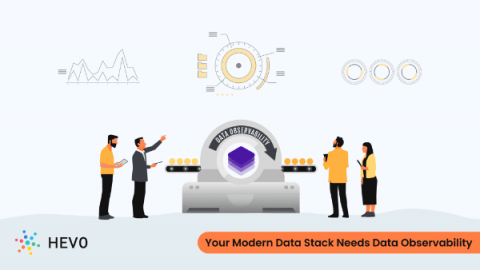
Data 'Poka-Yoking' With Data Observability for the Modern Data Stack

While in the past, businesses used data to gain an edge over their rivals, in today’s competitive environment, data is imperative to stay in business. Modern businesses rely increasingly on data to manage all aspects of their operations, from everyday workflows to impacts on business strategy and customer interactions. As a result, data stacks have become extremely complex.

Transforming Kong Logs for Ingestion into Your Observability Stack

As a Solutions Engineer here at Kong, one question that frequently comes across my desk is “how can I transform a Kong logging plugin message into a format that my insert-observability-stack-here understands, i.e. ELK, Loki, Splunk, etc.?” In this blog, I’m going to show you how to easily accomplish converting a Kong logging payload to the Elastic Common Schema. In order to accomplish this task, we’re going to be running Kong Gateway in Kubernetes and using two Kong plugins.

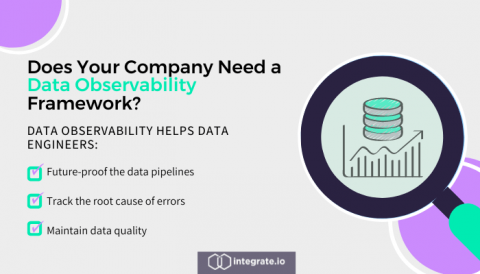
Does Your Company Need a Data Observability Framework?

You have been putting in the work, and your company has been growing manifold, Your client base is growing more than ever, and the projects are pouring in. So what comes next? it is now time to focus on the data that you are generating. When programming an application, DevOps engineers keep track of many things, such as bugs, fixes, and the overall application performance. This ensures that the application operates with minimum downtime and that any future errors can be predicted.

Enhance Observability with Opentelemetry tracing - Part 1

Recently, conversations have been increasing around OpenTelemetry; it is gaining more and more momentum in Node.js development circles, but what is it? How can we take advantage of the key concepts and implement them in our projects? Of note, NodeSource is a supporter of OpenTelemetry, and we have recently implemented full support of the open-source standard in our product N|Solid. It allows us to make our powerful Node.js insights accessible via the protocol.


Get Ready for the Next Generation of DataOps Observability

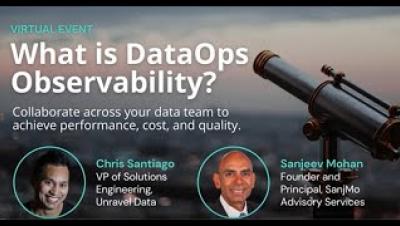
I was chatting with Sanjeev Mohan, Principal and Founder of SanjMo Consulting and former Research Vice President at Gartner, about how the emergence of DataOps is changing people’s idea of what “data observability” means. Not in any semantic sense or a definitional war of words, but in terms of what data teams need to stay on top of an increasingly complex modern data stack.

Distributed tracing with Envoy, Kuma, Grafana Agent, and Jaeger

As a cloud service provider, observability is a critical subject as it's strongly related to the availability of the services running on the platform. We need to understand everything that is happening on our platform to troubleshoot errors as fast as possible and improve performance issues. A year ago, while the platform was still in private beta, we faced a tough reliability issue: users were facing random 500 errors when accessing their applications.

DataOps Observability Designed for Data Teams

Today every company is a data company. And even with all the great new data systems and technologies, it’s people—data teams—who unlock the power of data to drive business value. But today’s data teams are getting bogged down. They’re struggling to keep pace with the increased volume, velocity, variety, complexity—and cost—of the modern data stack. That’s where Unravel DataOps observability comes in.

DataOps Observability: The Missing Link for Data Teams

As organizations invest ever more heavily in modernizing their data stacks, data teams—the people who actually deliver the value of data to the business—are finding it increasingly difficult to manage the performance, cost, and quality of these complex systems. Data teams today find themselves in much the same boat as software teams were 10+ years ago. Software teams have dug themselves out the hole with DevOps best practices and tools—chief among them full-stack observability.

A DataOps Observability Dialogue: Empowering DevOps for Data Teams

A DataOps Observability Dialogue: Empowering DevOps for Data Teams It used to be said that software is eating the world, but now data is running things. And it’s high-functioning data teams who make it all happen. But data teams are facing several obstacles that prevent them from delivering innovative analytics at today’s increased speed and scale. Software teams have been facing the same challenges for 10+ years and have tackled them with DevOps. So why are DataOps teams struggling when DevOps teams aren’t? They’re using the same tools to solve basically the same problem. . . .