Systems | Development | Analytics | API | Testing

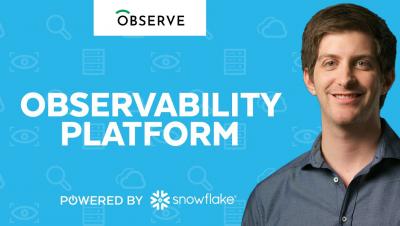
How Observe Built An Observability Platform On Snowflake.

The Observability Platform from Observe is a tool that helps engineers and DevOps teams quickly analyze the performance of and troubleshoot problems with an organization’s distributed applications. Its power comes from its ability to ingest any kind of telemetry and machine data–trace data, log data, metric data, billing data, and so on–into a single source using Snowflake, and then map the relationships between data sets. These relationships can be displayed graphically as an interactive visualization, making it easy for end users to trace connections between datasets in order to diagnose the cause of error notifications or gain insight into an application's performance.
Sponsored Post

Speedscale Launches CLI: Free API Observability Tool

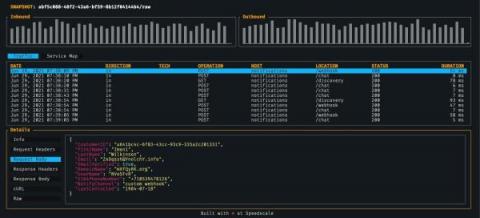
We are excited to announce the launch of Speedscale CLI, a free observability tool that inspects, detects and maps API calls on local applications or containers. The offering underscores the importance of continued and proactive API testing to quickly detect and debug defects within a shifting array of upstream and downstream interdependencies.

REST API Observability for Python

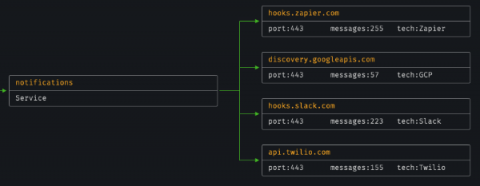
In this blog post we’ll help answer the age old question, “What does this service talk to and what does it say?” We’ll see how to inspect inbound and outbound REST API calls to see what calls are being made and what incoming traffic causes a reaction. This can be pretty handy when you’re taking over maintenance of an existing service, or if your code just isn’t behaving the way you expect.

Using Elastic ML to Observe Your Kuma API Observability Metrics

Observability is catching on these days as the de-facto way to provide visibility into essential aspects of systems. It would be unwise for you not to leverage it with Kuma service mesh — the place that allows your services to communicate with the rest of the world. However, many observability solutions restrict themselves to the works: simple metric collection that provides them with dashboards. Expecting users to simply sit on their chairs and look at those metrics all day long is an invitation to failure, as we know that one can only do so much when they get tired and bored.

Building Smart O11y for Kuma With Elastic Observability

This blog was co-created by Ricardo Ferreira (Elastic) and Viktor Gamov (Kong). We love our microservices, but without a proper observability (O11y) strategy, they can quickly become cold, dark places cluttered with broken or unknown features. O11y is one of those technologies deemed created by causation: the only reason it exists is that other technologies pushed for it. There wouldn’t be need for O11y if, for example, our technologies haven’t gotten so complex across the years.

Application Observability With Kuma Service Mesh

The more services you have running across different clouds and Kubernetes clusters, the harder it is to ensure that you have a central place to collect service mesh observability metrics. That’s one of the reasons we created Kuma, an open-source control plane for service mesh. This tutorial will show you how to set up and leverage the Traffic Metrics and Traffic Trace policies that Kuma provides out of the box.

Services Don't Have to Be Eight-9s Reliable with Liz Fong Jones from Honeycomb | Kongcast Episode 1

In this Kongcast episode, Liz Fong-Jones, principal developer advocate at Honeycomb, introduces us to the concept of error budgets for service-level objectives (SLOs) and demonstrates how to accelerate software delivery with observability.

Kong Konnect: Maximize Service Reuse, Observability and Manageability

Developer teams need to move faster than ever today and reusing services is a great driver for agility. In this tutorial, you'll learn how to use ServiceHub to enable development teams to search, discover and consume existing services. You'll also learn about Runtime Manager and Vitals for operational metrics of deployed services.

Service Mesh and Microservices: Improving Network Management and Observability

Whether you're transitioning away from a monolith or building a green-field app, opting for a microservice architecture brings many benefits as well as certain challenges. These challenges include namely managing the network and maintaining observability in the microservice architecture. Enter the service mesh, a valuable component of modern cloud-native applications that handles inter-service communication and offers a solution to network management and microservice architecture visibility.