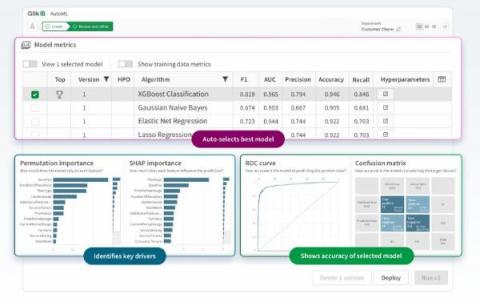
To this point, AI has been applied to augment analytics in a somewhat bifurcated fashion. On one hand, we have seen natural language support the business consumer that requires simple answers to known questions, helping them quickly take action. And, on the other, AI helps content authors and BI developers auto-suggest charts and automate data preparation, improving efficiency and reducing manual workloads. But, there’s a gap, and the value is huge.
In a previous article, we talked about the lost art of questioning and its importance when working with data and information to find actionable insights. In this article, we will expand on this topic and explain how questioning differs depending on what stage in the process you are from transforming data and information into insights.
In this series of demystifying the tech trends, my colleagues and I will be looking at busting the buzzwords to help you keep on track. Concerned about puzzling parlance, analytics argot, techie terminology – or plain old jargon? This series breaks down words and concepts to give you the deepest insight and understanding into how to talk the talk in the world of tech, so you can engage in conversations with the confidence of being data literate.
Greek philosopher Heraclitus wasn’t talking about the challenge of today’s enterprise IT landscape but the quote certainly fits. From the advent of the first digital computer in the 1940s to the emergence of first public cloud in 2004, the rate of change has only accelerated. In fact, over 60% of corporate data resides in the cloud in 2022, up from 50% last year.