Systems | Development | Analytics | API | Testing

Systems development lifecycle (SDLC) with the Qlik Active Intelligence Platform - Part 2

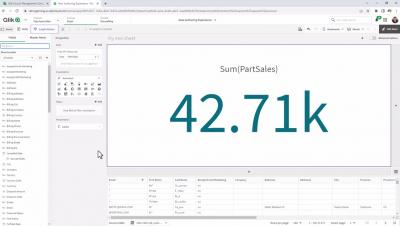
In this video we will show how we can build context-aware applications so, your applications will know not just whether they are in Development, Test or production, but also whether they are a Sales, Finance or HR app. We will do this using built-in functionality of Qlik Cloud. We will also look at using these techniques to manage external script libraries so we can ensure we use the correct version of libraries based on where our apps reside.

A CFO's Perspective: Understanding The Positive Business Impact of a Modern Financial Analytics Approach

I recently sat down with CFODive to discuss the importance of modern financial analytics in transforming the way financial leaders and their organizations operate – a topic that is only becoming increasingly prominent. Business strategies have had to rapidly adjust to address market volatility, consumer trends, and unpredictable world events. These dynamics have forced finance teams to rethink how they are using data and analytics and take a more modern approach.

Three Ways Active Intelligence Can Support the CFO

Finance has been at the forefront of enterprise analytics for decades. Over the years, these analytics have evolved from reactive, descriptive analytics related to financial performance, treasury holdings, and inventory management to predictive and prescriptive analytics for risk, credit, and financial business modeling.

The New Breed: How to Think About Robots

You’ve heard the saying “if you do what you love, you’ll never work a day in your life,” right? Well, I hate to say it, but that’s me. I never dreamed that I would wind up in a field that combined all of my interests, but somehow that happened. Through my research at the MIT Media Lab I get to apply my legal and social sciences background to human-robot interaction. Which yes, does mean that I mostly get to play with robots all day.

Modernizing the Analytics Data Pipeline

Enterprises run on a steady flow of best-fit data analytics. Robust processes ensure these assets are always accurate, relevant, and fit for purpose. Increasingly, organizations are implementing these processes within structured development and operationalization “pipelines.” Typically, analytics data pipelines include data engineering functions such as extract-transform-load (ETL) and data science processes such as machine-learning model development.