Systems | Development | Analytics | API | Testing

Iceberg 101: Better Data Lakes with Apache Iceberg

With growing data volumes, organizations are forced to rethink how they store and manage data. Traditional data warehouses, while powerful, became expensive and rigid when faced with the volume, variety, and velocity of modern data - leading to the rise of data lakes as a promising alternative. However, organizations soon found that data lake in themselves were not a panacea, and often provided limited utility due to their unstructured nature.

Get More Out of Your Data Lakehouse With Trino

Let’s face it. Data lakehouses are the new normal, but that does not mean they are easy to use. Apache Iceberg gives you version control, schema evolution, and fine-grained partitioning. Trino lets you query it all with blazing speed. When it is time to plug that into your BI tools or analytics pipelines, things often grind to a halt. The problem is not your data or your engine. It is your connector. Architecting a data lakehouse is one thing. Getting it to actually perform is another.

Introducing Qlik Open Lakehouse

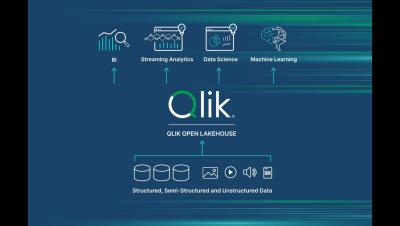
Qlik Open Lakehouse is a fully managed capability within Qlik Talend Cloud that makes it easy, effortless, and cost-effective for users to ingest, process, and optimize large amounts of data in Apache Iceberg. With Qlik Open Lakehouse, you can now set up a Lakehouse in your Amazon S3 environment, load data directly into Apache Iceberg tables, and optimize it continuously - all with just a few clicks.

Data Lake Transformations for Modern Analytics

In today’s data-driven world, businesses are navigating an unprecedented surge in information—global data volumes are expected to reach 175 zettabytes by 2025. At the heart of this revolution is the data lake: a flexible, scalable, and cost-effective solution that is redefining how organizations store, process, and extract value from their data.