Systems | Development | Analytics | API | Testing

Modern Software Development For Today's Systems & Applications



Reliable Pipelines, Predictable Bills: Why Settle for One Without the Other
Somewhere along the way, data teams accepted a trade-off: pipelines that just work, or bills that you can actually forecast, pick one. So you live with the silent failures, the schema changes that break dashboards overnight, and the month-end invoice that never quite matches the data you moved. Not because it's acceptable, but because it's familiar. In this session, we're challenging that trade-off head-on. We'll break down where pipelines fail quietly and where costs inflate invisibly and show you, live, what it looks like when your pipeline gives you full visibility into every sync, every record, and every dollar.

Why did my test fail? Katalon Studio 11.2's AI Failure Analysis | Give It a Test
Katalon Studio 11.2 is out. Xuan Tran (PM, Studio) walks through what's new in our product, including AI Failure Analysis, which tells you why a test failed instead of making you read the logs.

AI Agents Deployed, but what about cost optimization?
AI agents are no longer a pilot-stage bet. As of 2026, 80% of enterprises have at least one production AI agent deployed. The global AI agents market has crossed $10.91 billion and is sprinting toward $52.62 billion by 2030. The cost-per-task economics are staggering: a human-handled customer support ticket costs $4.18 on average. An AI agent resolves the same ticket for $0.46. That is a 9x cost reduction, right there.
Is AI making your teams better, or just busier?
AI adoption programs tend to end in the same place. Tools are accessible, usage is up, and there's a dedicated Slack channel for wins. Six months later, nothing about how the team works has fundamentally changed. People are doing the same things – just slightly faster. And it’s easy for programs to stall when you’re measuring the wrong thing. Adoption (whether people have access and whether they're using the tools) is visible and easy to report.
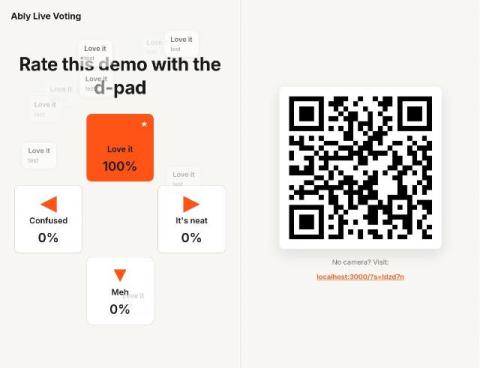
One person, one vote: building live voting with message annotations
Live polls are a staple of conferences, streams, and all-hands: a question goes up on the big screen, everyone votes from their phone, and the bars race each other in realtime. There's a lot of different ways you could implement this.

AI Coding Tools and API Governance: Here's Why You Need Both.
GitHub Copilot, Claude, and Cursor have become genuine superpowers for API development. They draft OpenAPI definitions, generate endpoints, propose schema changes, and write test cases — all from inside the IDE, in real time. Teams using these tools are generating API definitions faster than most thought possible even a few years ago. That velocity is real, and it’s reshaping how engineering teams think about their toolchain.

Why Engineers Lose 30% of Their Time to Manual Test Authoring - and How to Get it Back
When automated test script generation consumes a significant chunk of engineering capacity, your roadmap was already behind the eight ball before the sprint even began.

Rubber Duck Debugging: How to Find and Fix Logic Bugs
Rubber duck debugging allows us to discover our own coding errors by retracing our steps. Instead of relying on complex black-box tools, we simply explain our own logic until the problem reveals itself. This is one of the most straightforward debugging techniques around, and it can be easily enhanced by AI tools.

The Impact of Network Latency on Cloud Load Testing Accuracy: Why It Matters in 2026
Despite years of progress in cloud testing platforms, network latency remains the most stubborn – and often ignored – variable in load testing reliability. A recent study highlights that network latency can skew load test results by as much as 30%. That’s not a rounding error; it’s the difference between a site that passes in the lab and one that buckles under real-world traffic.