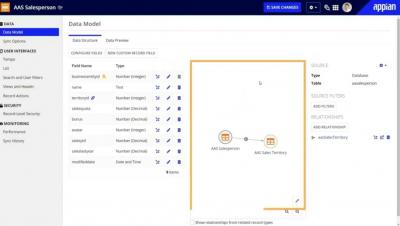
Easily build and adapt custom applications with Appian.
Presented by Rose Psalmond, Sr. Solutions Consultant. Learn how you can easily build and adapt custom applications that help you stand out in the market to.


It began with the pandemic. Consumer spending shifted from experiences to goods, spiking demand. Ports clogged due to shutdowns. Factories operated at reduced capacities from sickness, lockdowns, or even infrastructure issues like rolling blackouts. But it didn’t end there. The ripple effects have continued. Supply chains continue facing upheavals, particularly with respect to inflated prices and global conflict like the war in Ukraine. This leaves supply chain professionals on shaky ground.
Managing a delivery team that supports any complex business requires aligning people and technology with the needs of your customers in order to deliver the software they need to run the business. Firms that operate within regulated environments like financial services, including capital markets also have to contend with external influence from regulatory partners—which can shape not only what you’re asked to do but also how you need to do it.
The underwriting process is notoriously inefficient. Today, underwriters typically spend 40% of their time on non-core activities such as gathering and entering data for submissions and renewals, issuing policies, and administrative tasks. The result of such manual underwriting is lost productivity and higher costs, with an expected price tag for insurers of $85–$160 billion in lost business over the next five years. In the current economic climate, efficiency is more important than ever.
Raise your hand if your team has ever been forced to prioritize delivery speed over sound design. It happens all too often in the world of application development, and we’ve all been there. The compromises made in the rush to deliver value to your customers result in technical debt. As a delivery leader, you need to manage the repayment of technical debt, which taxes your productivity and is a potential source of functional and cyber risk.
In recent years, manufacturers faced major disruptions. Supply chain issues, unexpected product demand spikes, and delivery driver shortages led to longer lead times. While you can’t completely control external factors like these, you have far more control over your own internal manufacturing cycle times. This post will cover what cycle times are, the benefits of reducing them, and four strategies to help with cycle time reduction. .
These days, few people need to be convinced of the value of data. As businesses face pressure to innovate, IT is often overwhelmed with requests for custom data-driven applications. But the issue is that for many IT teams, data is still more of an obstacle than an enabler. As data sources proliferate, data access becomes a complex puzzle.
Government agencies and industry leaders convened this month in Washington, DC, to attend the 5th annual Appian Government conference. Sessions addressed how to accelerate digital transformation, reimagine the citizen experience, and optimize case management through intelligent process automation (a.k.a., hyperautomation) using low-code software development.