Systems | Development | Analytics | API | Testing

The 10 Best API Integration Tools, Platforms, and Software (easy to use)

Application Programming Interface (API) is a set of rules or protocols that allows one software application to interact with another. An API integration tool is a software that facilitates the ‘talk’ or communication and data sharing between different software systems and applications. While manual API integration is possible, utilizing API integration tools enhances the efficiency and reliability of this process.

A Complete Guide to API Generation

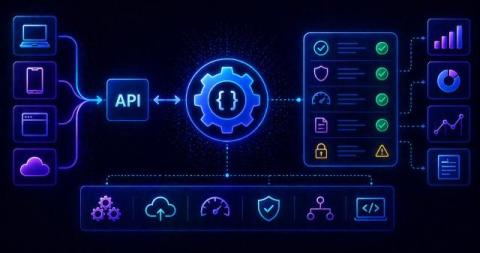
API generation automatically creates an API based on pre-defined code and specific requirements, such as data access methods. APIs are the essential unit of a hybrid integration platform (HIP), an architectural approach to connecting everything or anything through a digital pulse. In this hustle to connect everything digitally, organizations need a process to acquire safe and secure APIs. API generation can make this happen, allowing companies to generate and deploy APIs without writing code.

An Introduction to Active Data Governance

The way that companies govern data has evolved over the years. Previously, data governance processes focused on rigid procedures and strict controls over data assets. But now, with the data-driven culture, modern enterprises are adopting an agile approach toward data governance that primarily centers around data accessibility and empowering business users to take responsibility for governing and managing data.

A Guide to Automated Data Governance: Importance & Benefits

Automated data governance is a relatively new concept that is fundamentally altering data governance practices. Traditionally, organizations have relied on manual processes to ensure effective data governance. This approach has given governance a reputation as a restrictive discipline. But, as organizations increasingly adopt automation in their governance processes, this perception is changing.

What is API Monitoring? Best Practices to Track API Performance and Metrics

API downtime can cost businesses an average of $140,000 to $540,000 per hour. Maintaining reliable and high-performing APIs has become critical for any digital business’s success, with much at stake. This scenario is where API monitoring steps in. An important part of API management, monitoring API metrics allows organizations to detect issues rapidly and optimize their API performance.

Data Lineage: A Complete Guide

Data lineage is an important concept in data governance. It outlines the path data takes from its source to its destination. Understanding data lineage helps increase transparency and decision-making for organizations reliant on data. This complete guide examines data lineage and its significance for teams. It also covers the difference between data lineage and other important data governance terms and common data lineage techniques.

Astera's Guide to Marketing Data Integration and Governance

Customer data provides a treasure trove of insights into their behavior and preferences. Marketers must leverage this information to drive strategic decisions and optimize marketing campaigns. Analysts must consolidate fragmented data across various systems to use customer data effectively. With proper data integration and governance, marketers can effectively transform their data assets into insights that inform their decision-making.

What is Streaming ETL?

Streaming ETL is a modern approach to extracting, transforming, and loading (ETL) that processes and moves data from source to destination in real-time. It relies on real-time data pipelines that process events as they occur. Events refer to various individual pieces of information within the data stream. Depending on the source and purpose of the data, an event could be a single user visit to a website, a new post on a social media platform, or a data point from a temperature sensor.

Data Catalog vs. Data Dictionary vs. Business Glossary: Key Differences

A data catalog is a collection of metadata that acts as a comprehensive inventory of an organization’s data assets. It provides an overview of all the data available, regardless of its location or technical details. This collection helps analysts and other data users find the needed data.