AI-assisted code remediation, a new feature in Perforce Static Analysis tools QAC and Klocwork, speeds up development by providing immediate fix suggestions to reported issues. Launch faster, with confidence.
Run your first LLM proxy on WSO2 Platform AI Gateway in minutes — no cloud setup required, just Docker. This quickstart walks you through spinning up the WSO2 Platform AI Gateway as a standalone component on your own infrastructure. You'll add an OpenAI provider configuration (including API key auth and access control rules), deploy an LLM proxy that routes through it, and verify live responses end to end. What you'll set up.
This video shows how the WSO2 solution helps businesses follow the rules of India's Digital Personal Data Protection (DPDP) Act. You will see how the system handles user consent in a simple way to keep your business compliant with the new regulations.
Every enterprise engineering leader knows the frustration of a stalled delivery pipeline. You push a minor user interface optimization or rename a single CSS utility class, and suddenly, a stable deployment build turns red. Hundreds of automated test scripts break instantly, not because the application logic failed, but because a static element locator changed. This is the reality of modern software delivery.
Most debugging agents fail not because the model is wrong, but because the data going in is not ready for machine consumption. Here's what data curation actually looks like in practice. When we started building Multiplayer's debugging agent, we made the same mistake almost everyone makes. We gave our coding agent access to observability data and expected it to figure out what was relevant. It didn't.
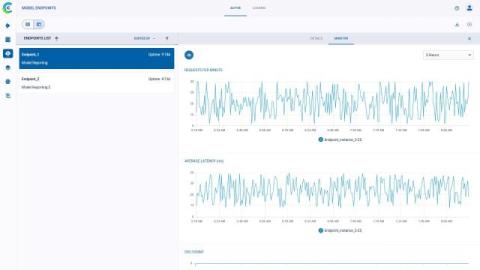
Most enterprises sized their AI infrastructure with a playbook written for training. However, training is no longer the typical workload. Inference now eats up roughly two-thirds of all AI compute, and it is changing shape fast enough that the rules of thumb from 18 months ago just do not hold. Our view at ClearML is pretty simple: when the workload shifts this much, the platform underneath it has to shift with it.
Not every test automation problem looks the same. A team maintaining complex desktop applications in a controlled financial services environment has different automation needs than a team shipping web and mobile updates every two weeks. The application, the environment, and the people creating tests all shape what “good automation” has to do.
You recognize the tune, but something feels off. That's how Marlon Davis describes many of today's AI initiatives: AI karaoke. Organizations are rushing to add AI to products, but too often they're layering technology onto solutions without fully understanding the customer problems they're trying to solve. In this episode of The AI Forecast, Paul Muller sits down with fractional Chief Product Officer at Devlnio, Marlon Davis, to explore how organizations can move beyond superficial AI efforts and build products that deliver meaningful customer value.
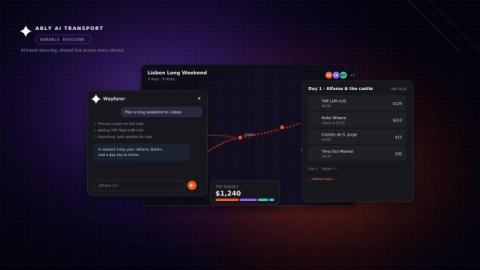
You are planning a trip with an AI assistant on your laptop. You are chatting with the agent, and as you progress it is dropping pins on a map, building a day-by-day itinerary, adding up a budget, and streaming its reasoning as it goes. The state of your interactive session is a combination of the chat history, the synthetic UI constructed by the agent during that process, and structured state, the itinerary, arising from the decisions you each make.