Systems | Development | Analytics | API | Testing

Control the spend and usage of your AI testing agents | SmartBear BearQ

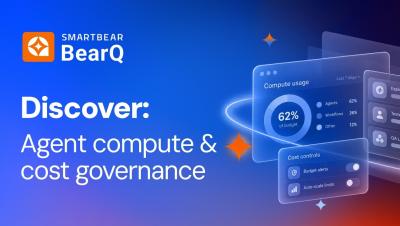
Worried an AI teammate could rack up a surprise bill? In this video, you’ll learn how SmartBear BearQ gives you real governance over AI testing spent – built with pre-baked monthly limits, so your team always knows what to expect before a single agent gets to work.


Real Estate Data Enablement: Make Property Data Usable for AI, Reporting, and Automation

Which properties in your portfolio are becoming less profitable, and why? A reliable answer usually means pulling lease and occupancy data from the property management system (PMS), operating costs from accounting, maintenance records from a third platform, and rent comparables from outside the company. Some of it lives only in a spreadsheet one analyst maintains. The answer can take days, and two teams can come back with different numbers. Large real estate companies rarely lack software or data.

The eMudhra certificate compromise: how it affects Bitrise users

On October 17, 2026, the developer world learned that the private keys of eight intermediate certificate authority (CA) certificates from eMudhra had been compromised. In this article, I’ll explain how that affects the Bitrise environment powering your Bitrise CI jobs, Build Hub runners, and Remote Developer Environments.

6 Vibe Coding Security Tools for Enterprise Engineering Teams

AI coding assistants are changing how enterprise software gets built. Developers can generate applications, refactor code, install dependencies, and connect external services through natural-language instructions. But the same tools that accelerate development can also access sensitive files, execute commands, and introduce unverified components into corporate environments.

New from Qlik: Introducing Semantic Models for Data Products

Semantic Models in Data Products bring shared meaning into the data product itself, giving analytics and AI the context to understand your data. You define measures, dimensions, and relationships once, in a visual, versioned model. Link measures and dimensions to business glossary terms, so your business definitions flow into your applications. AI suggestions recommend relationships as you build. And because they are packaged directly in the data product, definitions and context, lineage, ownership, and trust scores carry automatically wherever the data is used.

Qlik Answers: Faster, Smarter Insights

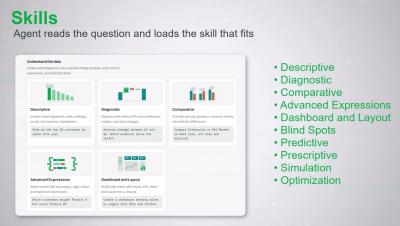
New in the October Product Recap: Qlik Answers gets a streamlined architecture, custom skills, and advanced reasoning driven by the Qlik analytics engine. Advanced reasoning unlocks a new level of analytical insight, allowing AI to go beyond "what happened" into causal, comparative, and predictive insight, and even run simulation, optimization, and counterfactual analysis for recommendations that guide action. And, we are expanding the Qlik Engine’s ability to unlock the power of gray through AI, for insight into “what’s not” – hidden opportunities outside the query criteria.

Qlik Feature Preview

Try new capabilities on your terms with Feature Preview. You can now browse upcoming features, turn them on for yourself, and turn them off whenever you like, with no waiting. You can share feedback on what you test, and tenant admins control who has access, so rollout stays managed at the organization level. Look for the feature preview section in your user profile settings. Generally available September 9th.

How AI Is Changing the Role of the Modern QA Engineer

If you started in quality engineering decades ago, your whole mental model was forged in deterministic logic: assert(actual === expected). You took a business requirement specification, mapped out boundary values, wrote explicit test steps in TestRail or Jira, and automated them in Selenium, Cypress, or Playwright. In traditional QA testing, if an input of 2 + 2 yielded anything other than 4, you opened a severity-1 blocker, attached the stack trace, and kicked the build back to the developers.