Systems | Development | Analytics | API | Testing

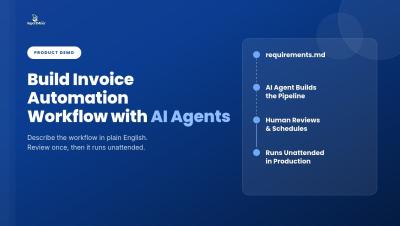
Build Invoice Automation Workflow with AI Agents | Astera ReportMiner

See how Astera ReportMiner uses AI Agents to build invoice automation workflows without the time consuming manual configuration. Upload your invoice requirements, and the Agent builds the workflow for extraction, transformation, validation, and delivery to your preferred destination. It shows each step as it works, so your team can review and verify the process before deployment. Once approved, the workflow can be scheduled to run unattended.
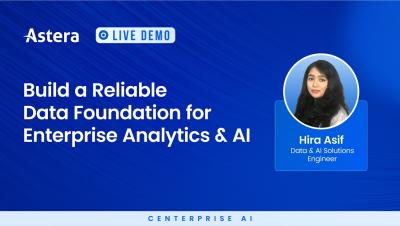
Live Demo | Build a Reliable Data Foundation for Enterprise Analytics & AI

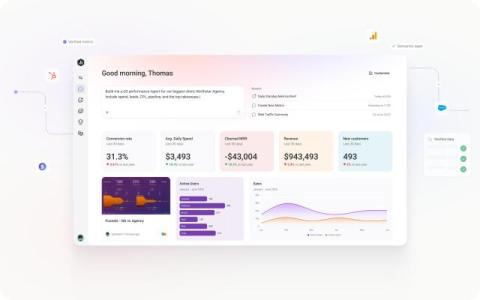
See how Astera turns data preparation and analytics into a conversational experience. Ask questions in plain language, prepare and analyze data, and turn the results into live dashboards without manually building every step. Astera brings structured and unstructured data into a governed data warehouse, then lets teams explore it through natural language. Every chart is traceable to its source, transformation steps, and underlying logic, so teams can validate how each answer was produced.

Put Your Data to Work with ThoughtSpot in ChatGPT Work

Every organization says it wants self-service analytics, but very few have it. What actually stalls true self-service analytics is the invisible work that has to happen before anyone can ask a data question: the semantic layer, query engine, security model, and analytics app. That work lands on your product and data teams, who are already time-strapped to deliver core features and strategy, and it lands on them again every time a new question, a new tenant, or a new dashboard request arrives.

Why Your AI Strategy Needs Both Shared and Shared-Nothing Storage

As enterprises scale AI initiatives from the core data center to the edge, many organizations are thwarted by weak data practices and fragmented systems. The attempt to use a one-size-fits-all architectural approach for workloads that have fundamentally different needs is no longer a solution. If your AI ambitions are outgrowing your storage: the solution isn’t just adding more capacity, but matching the right architecture to the right stage of the AI lifecycle.

Closing the gap to AI speed with a holistic test management approach

Every AI headline this year is about speed: code shipping faster, test scripts generating in seconds, releases compressing from weeks to days. What gets less attention is what happens to quality when everything around it accelerates and the way you manage testing doesn’t.

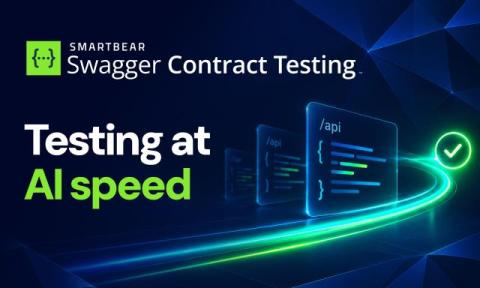
Testing at AI speed: We built a drift detection capability, then used it on ourselves

Drift detection stays narrow on purpose. It checks contract conformance – structure, status codes, schema – and deliberately leaves workflows and business logic to functional and end-to-end tests. That’s what makes it a fast add to our pipeline to prevent API drift. That narrow scope keeps it cheap to run. Fast execution, low flakiness, low maintenance cost – the kind of checks that make you more confident shipping. Catching drift early is the whole point.

Top 17 AI Testing Tools

Generating tests isn’t the hard part anymore. Ask an LLM to create Playwright tests, and it will produce hundreds of them in no time. The problem lies in deciding whether those tests are useful, maintaining them as your application changes, and knowing if you’ve even chosen the right tool in the first place. This article compares 17 AI testing tools across 5 categories. We’ll look at what each of them does, where it fits, what makes it different, and where it falls short.

What's Next Is Not More AI. It's Better Foundations.

The next real advantage in artificial intelligence will not come from the next AI tool or application. It will come from a stronger data foundation beneath it. At Hitachi Vantara we work every day with customers on the data supporting their systems. That vantage point has led me to a simple conclusion: the leaders who pull ahead will not be the ones with the most advanced AI. The leaders will be those whose data foundations are strong enough so that AI can be trusted to act.