Systems | Development | Analytics | API | Testing

Modern Software Development For Today's Systems & Applications



How Agentic QA is Changing Software Testing for the Better
Agentic AI is now moving into quality assurance (QA), and its impact is undeniable. What used to be a human-only responsibility is now becoming a shared system of humans and intelligent agents that observe, reason, and act across the stack.

How do you plan to test 10x more code with the same old tools?
You can’t test 10x more code with the same old tools. As AI dramatically increases code volume and speed, traditional testing becomes a bottleneck. Teams need AI embedded across the entire testing lifecycle to scale testing, boost productivity, and keep releases moving fast without sacrificing quality — Alex Martins, VP of Strategy at Katalon Follow Katalon for more insights in our series!

Agentic AI: From Reactive Bots to Autonomous Digital CoWorkers | Toni Ramchandani
Agentic AI marks the next evolutionary leap in artificial intelligence - systems that don’t just answer prompts or generate content, but plan, decide, and act on our behalf with minimal oversight. In this webinar, we’ll demystify what “agentic” really means, trace the shift from single‑step chatbots to multi‑step autonomous agents, and explore the architectures—sense‑plan‑act loops, large‑language‑model reasoning layers, and tool‑integrations—that make true agency possible.

AI in State and Local Government: Impact Starts with Process, Not Hype
Why “standalone AI” falls short AI works best when embedded in a process Guardrails are not a limitation—they’re an enabler Process-driven AI in action How leaders should be thinking about AI now Artificial intelligence is no longer optional in state and local government—it’s essential for meeting public expectations amid staffing shortages and budget constraints. AI is showing up across agencies and programs.
Let Your LLM Debug Using Production Recordings
Modern LLM coding agents are great at reading code, but they still make assumptions. When something breaks in production, those assumptions can slow you down—especially when the real issue lives in live traffic, API responses, or database behavior. In this post, I’ll walk through how to connect an MCP server to your LLM coding assistant so it can pull real production data on demand, validate its assumptions, and help you debug faster.

Securing LLMs: Insights into OWASP Top 10 | Maryia Tuleika | TTTribeCast Webinar
AI can feel like a black box, but when it is tested like any other system, unexpected weaknesses begin to surface. This session explores how large language models can be pushed into unsafe or unintended behavior, revealing that AI is not immune to flaws, poor decisions, or broken assumptions.
Implementing AI in the Playwright Framework | Muralidharan R. | TTTribeCast Webinar
Implementing the Playwright Framework with AI explores how to enhance test automation by integrating AI capabilities. This approach minimises code writings, eliminates traditional locator strategies, and ensures low test maintenance. The session will demonstrate how AI-driven solutions can simplify and optimise test automation, making it more efficient and scalable.
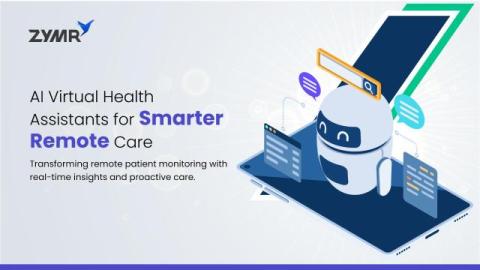
AI Virtual Health Assistants: The Future of Remote Patient Monitoring
The healthcare industry stands at the precipice of a revolution, shifting away from reactive, hospital-centric care towards proactive, personalised, and remote management. At the heart of this transformation is Remote Patient Monitoring (RPM), a system that uses connected digital health technologies to gather and transmit patient physiological data outside of traditional clinical settings. While RPM offers tremendous value, it generates a massive, continuous stream of data.

Revolutionizing Web Testing with Playwright & Gen AI | Vignesh Srinivasa Raghavan
Discover the groundbreaking convergence of Playwright and Generative AI that's transforming how web testing is approached. This session unveils a revolutionary capability where AI assists in automatically generating test scripts without requiring manual coding. Experience how this intelligent automation system can analyze your application, understand user flows, and create comprehensive test suites with minimal human intervention.