We collect the latest Development, Anaytics, API & Testing news from around the globe and deliver it direct to your inbox. One email per week, no spam.
After attending Oracle AI World, one thing is clear: Oracle is all in on AI. From embedded agents across Fusion Applications to the AI-native Oracle Database and OCI’s massive model-training capabilities, Oracle is positioning itself as the platform where enterprise AI comes to life. The energy was infectious. Every session, demo, and conversation carried a sense of acceleration: faster decisions, faster workflows, faster innovation.
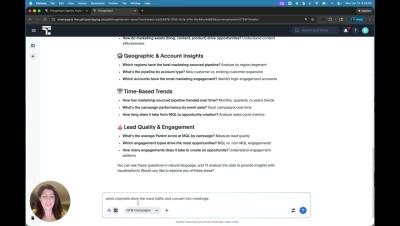
Protegrity’s Jessica Hammond joins Cloudera to discuss their data-centric approach. Learn how the partnership secures unstructured data and LLMs, enabling frictionless, automated AI and analytics on the Cloudera platform. Learn how Cloudera and Protegrity secure your AI data.
Data integration has long been one of the most time-intensive parts of enterprise IT. Connecting multiple systems, reconciling formats, and ensuring data reaches its destination reliably often requires weeks of preparation before the first record moves. But with AI-powered integration, that timeline compresses dramatically. What once took weeks can now be designed, validated, and delivered in minutes.
Organizations waste an average of $12.9 million annually due to poor data quality. Traditional ETL processes built on hard-coded rules break with schema changes, batch processing misses real-time insights, and manual mapping creates bottlenecks that delay critical business decisions by days or weeks.
Data teams spend 45% of their time on data preparation, which stifles business growth and delays critical insights. With the ETL market projected to grow from $533 million to $1.28 billion by 2034, businesses face an overwhelming array of choices. Yet traditional ETL tools require specialized coding expertise that non-technical teams simply don't have, creating dangerous dependencies on overburdened IT departments.
AI agents have exploded. And we use this term intentionally. Tech vendors rushed to put out agent products that don’t stand up to enterprise use with results that were mostly underwhelming and sometimes even catastrophic. Appian took a different approach. While companies are now scrambling to validate the efficacy of their AI, Appian’s AI is field-tested, so the products you get are ready to use and safe to deploy from day one.
Just a few years ago, AI’s effect on software development was debatable — would it be as transformative as everyone predicted? But its impact is undeniable. In a 2024 survey, a majority of developers reported using AI in development, a sharp increase from the year before. In a short period of time, developers adapted, integrating agentic AI into their daily operations to boost productivity. Quality assurance teams are not far behind.
Ever wondered what's next for agentic AI? In this quick chat, we dive into how agentic AI and real-time data are shaping the future—helping systems predict trends, make smarter decisions, and much more. Watch to find out what could be coming in 2026.