


|
By Martin Lepka
Part 1 ended with a question for anyone running an internal app: which sources does its most important output depend on? I thought I knew the answer for our marketing dashboard. On 9 August 2026 I found out I did not. Two months later, all 14 of our marketing sources land in one place, and the numbers we act on have changed. The full before-and-after list is in the second tab of the data map further down.
Data Fragmentation: Definition, Causes and Fixes

|
By On this page
Most portfolio reporting tools assume the data underneath them is already clean and comparable across every portfolio company. It rarely is. A fund with twenty portfolio companies usually has twenty different ERPs, twenty different charts of accounts, and a reporting team that spends the week before every LP update reconciling numbers by hand.
How to Build Consolidated Multi-Entity Reporting in Power BI

|
By On this page
Most multi-entity businesses do not choose their accounting systems. They inherit them. A new acquisition brings Xero. The legacy entity has been on Dynamics for eight years. The Czech subsidiary runs on ABRA Flexi and nobody is going near it. Your US portco uses QuickBooks, your UK one uses Sage Intacct, and the newest deal came with a NetSuite instance that the previous owner had half-implemented. You are not looking at a technology problem. You are looking at the reality of how groups grow.

|
By On this page
Anthropic recently published research showing that Claude behaves differently depending on the language you use. Not just translating differently. Actually expressing different values. In Arabic, Claude is warmer and more deferential. In English, it's more rigorous and cautious. In Russian, it challenges your assumptions more. When we read that, we had one question: does Kai do this too? So Jordan, our AI lead, analysed around 3,000 internal Kai sessions. The answer: yes.
|
By Kristyna Kaucka
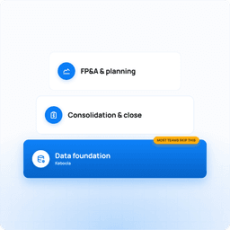
Most comparison guides in this space organise tools by feature count or analyst quadrant position. Neither is especially useful if you are a CFO trying to solve a specific problem under time pressure. The more useful diagnostic is category. Finance intelligence tools in 2026 fall into three distinct layers, and buying the wrong layer is the most expensive mistake you can make. Consolidation and close platforms are built to produce auditable, multi-entity financial statements.
|
By Kristyna Kaucka
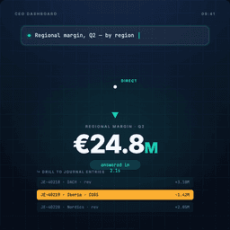
The goal is not complicated to describe. The CEO opens a dashboard, asks a question about regional margin for Q2, drills through to the underlying journal entries, and gets the answer in seconds, without asking anyone. No email to the controller. No waiting until Thursday. No 'let me come back to you on that.' Every CFO who has sat through a pitch for a data platform has been shown this vision. Most of them believe it is achievable. A meaningful number have actually achieved it.
|
By Kristyna Kaucka
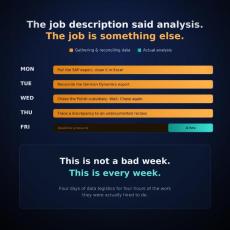
It is Monday morning. Your strongest FP&A analyst opens their laptop and starts pulling the SAP export. They clean it in Excel, cross-reference it against last month's version, and flag the columns that have shifted format again. Tuesday they pull the Dynamics export from the German entity and begin reconciling the two. Wednesday the Polish subsidiary data has not arrived. They chase the local accountant, wait, chase again.

|
By Kristyna Kaucka
There is a pattern showing up in finance teams that almost nobody is writing about, because it runs counter to the narrative. Finance leaders at organisations with messy, ungoverned data have made a deliberate choice: they prefer working with a frozen Excel snapshot over connecting AI to their live financial data. Not because they are afraid of technology. Not because they distrust AI as a concept.


|
By Team Keboola
Known for their delicious food, Brett Kokot and Jeff Miller talking about their experience using Keboola and how they were able to transform their processes using Keboola, Snowflake and Looker for all their data needs.





- October 2026 (2)
- August 2026 (2)
- July 2026 (6)
- June 2026 (9)
- May 2026 (4)
- March 2026 (5)
- February 2026 (7)
- January 2026 (4)
- December 2025 (1)
- November 2025 (1)
- October 2025 (1)
- September 2025 (1)
- August 2025 (2)
- July 2025 (3)
- June 2025 (2)
- May 2025 (1)
- March 2025 (2)
- February 2025 (2)
- January 2025 (4)
- December 2024 (3)
- November 2024 (2)
- October 2024 (1)
- September 2024 (1)
- August 2024 (1)
- July 2024 (2)
- April 2024 (1)
- February 2024 (1)
- January 2024 (4)
- December 2023 (5)
- November 2023 (3)
- October 2023 (4)
- September 2023 (3)
- August 2023 (5)
- July 2023 (3)
- June 2023 (8)
- May 2023 (1)
- April 2023 (6)
- March 2023 (5)
- February 2023 (4)
- January 2023 (5)
- December 2022 (3)
- November 2022 (6)
- October 2022 (15)
- September 2022 (7)
- August 2022 (3)
- July 2022 (4)
- June 2022 (5)
- May 2022 (7)
- April 2022 (5)
- March 2022 (6)
- February 2022 (3)
- January 2022 (1)
- December 2021 (2)
- November 2021 (2)
- October 2021 (4)
- September 2021 (4)
- August 2021 (10)
- July 2021 (4)
- June 2021 (4)
- May 2021 (6)
- April 2021 (1)
- March 2021 (5)
- February 2021 (7)
- January 2021 (3)
- December 2020 (2)
- November 2020 (1)
- October 2020 (4)
- September 2020 (4)
- August 2020 (2)
- July 2020 (2)
- June 2020 (3)
- May 2020 (3)
- April 2020 (5)
- March 2020 (5)
- February 2020 (3)
- November 2019 (2)
- October 2019 (2)
- September 2019 (3)
- June 2019 (1)
- February 2019 (5)
- January 2019 (6)
- December 2018 (1)
- November 2018 (4)
- October 2018 (5)
- September 2018 (2)
- August 2018 (3)
- July 2018 (3)
- June 2018 (3)
- May 2018 (1)
- April 2018 (1)
- March 2018 (1)
- February 2018 (2)
- January 2018 (2)
- September 2017 (1)
Keboola is a cloud based data platform that helps clients combine, enhance and publish crucial information for their internal analytics projects and data products.
We significantly reduce or eliminate:
- Time spent on repetitive maintenance tasks.
- Long adoption and learning curves with outdated systems and processes.
- Tedious and drawn-out menial responsibilities which detract from efficiency.
Building on knowledge already plentifully available in the market such as SQL and R, we are able to achieve unparalleled Time to Value with our implementations. Many of our customers are completely self-serving from the inception of their project.
Let us show you what your company has been missing.