Systems | Development | Analytics | API | Testing

AI for DevOps: Fueling Innovation at Scale | Full DBTA Webinar

AI innovation moves fast, but without compliant data access, even the best ML, AI, and analytics initiatives can stall. In this webinar roundtable, experts from Perforce Delphix, 3T Software Labs, and Redgate explore how organizations can accelerate AI delivery without compromising data privacy, security, or compliance. You’ll hear practical insights and real-world examples on how to remove one of the biggest bottlenecks in modern software and data workflows: access to safe, usable, production-like data.

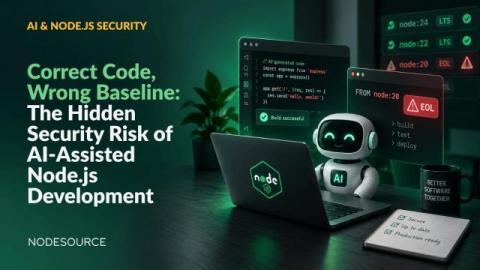
How to Test AI Agents: A Step-by-Step Evaluation Guide

Testing an AI agent means validating more than final outputs — it means auditing every intermediate tool call, reasoning step, and context decision the agent makes across its full execution trace. Unlike traditional software testing, where passing means the right function returned the right value, agent testing must verify that the correct sequence of decisions produced a reliable outcome for a non-deterministic system.

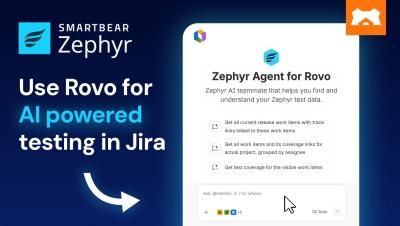
No-Code Test Automation with AI: A Guide for Non-Technical Teams

There's a quiet frustration that lives inside most QA teams, and almost nobody talks about it out loud. You know your product better than anyone. You can walk through a customer journey in your sleep. You spot a broken flow in seconds just by using the app the way a real user would. But the moment someone says "can you just automate that test?" the conversation shifts to a language you never had to learn. Selenium. Locators. Frameworks. Script maintenance. XPath. Java.

Ep 75 | Why Enterprise AI Still Breaks at Scale with Ravit Jain

As organizations rush to scale AI, many are learning that better models can’t compensate for weak data foundations. AI hype is everywhere, but operational readiness still isn’t. In this episode of The AI Forecast, Paul Muller sits down with Ravit Jain, founder of The Ravit Show and one of the leading voices in the global data and AI community, to explore the trends shaping the future of enterprise AI.

API Gateway vs AI Gateway - What Actually Changed?

Kong's AI Gateway applies the same architectural pattern as the API Gateway — now governing LLM, MCP, and agent traffic at the infrastructure layer. Just as API gateways abstracted rate limiting, auth, and caching across microservices, AI gateways do the same for large language models and agents — with token budgets, semantic caching, and semantic routing replacing their REST equivalents. Kong breaks this into three layers: LLM Gateway, MCP Gateway for tool calls, and Agents Gateway for agent-to-agent traffic.#Shorts.

Integrating RAG and GenAI into Customer 360 Architecture

Traditional Customer 360 architectures were perfectly adequate for the era of quarterly reports and static marketing segments. They successfully pooled data from CRMs, transaction logs, and support platforms to build a unified profile. But for GenAI-powered applications? Yesterday's architecture is a massive bottleneck. Here is why legacy systems are breaking down under the demands of modern AI, and how the architecture is forcing a shift to real-time data.

Zscaler Revolutionizes Cybersecurity Data with Snowflake

Zscaler's Tiffany Blakeney shares how her team replaced fragmented tools and months-long development cycles with Snowflake's all-in-one AI platform. By consolidating all data, APIs, and AI models in one secure platform, Zscaler reduced campaign creation from months to minutes—and more importantly, gained the trustworthy, governed AI foundation a cybersecurity company demands. Learn how they're using Snowflake's integrated AI capabilities to move from POC to production faster than ever while maintaining the security posture critical to their industry.

Tokens Per Watt Is the Real Limit on AI Revenue

Most AI revenue will flow through tokens — and the two bottlenecks are tokens per watt (energy cost) and tokens per second (throughput). Tokens per watt determines how much output you can generate from a fixed energy supply — already constrained and getting tighter. Tokens per second sets the ceiling on how fast that revenue can flow. Kong's AI Gateway optimizes both at the connectivity layer: semantic caching and semantic routing increase token output without adding watts or latency.#Shorts.

ROI of AI Test Automation: A Calculation Framework for QA Leaders

Every QA leader has faced the same conversation. Leadership asks: "What are we getting for our automation investment?" And the honest answer is often some version of "we're faster than we used to be" without hard numbers to back it up. That gap between intuition and evidence is where automation programs get defunded. Not because they are not delivering value, but because the value was never quantified in terms finance teams understand.