Imagine your business is an ocean. Under the surface, a rich ecosystem of processes, people, and technology needs to work together to create a healthy environment. Above the surface, constant waves can make or break your business, either propelling you to new opportunities or sinking you under pressure.
Artificial intelligence (AI) promises outsized gains in business efficiency. And since organizations live or die by their processes, integrating AI into the picture through AI process optimization can help boost ROI with end-to-end process automation and enhancements. This blog will explore five ways AI can be used to improve and optimize process efficiency. But first, let’s explain what AI process optimization means.
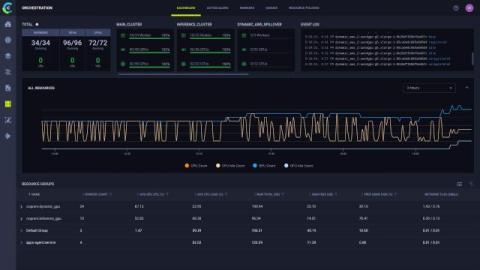
We recently rolled out our very own GPU autoscaler in Collaboration with Genesis Cloud and it has been quite a success. Also recently, YOLOv8 by Ultralytics was unveiled, the new king of object detection, segmentation and classification. In this blogpost we’ll see that you can train a computer vision model using the ClearML/Genesis Cloud autoscaler at a fraction of the cost of competing cloud services like AWS or GCP. And it even runs 100% off of green energy! 😎
Artificial intelligence (AI) has become increasingly important as organizations use it to drive innovation, enhance efficiency, improve decision making, and boost digital transformation efforts. But ensuring success requires significant, ongoing efforts. Consider setting up an AI center of excellence (CoE) to boost the success of your AI initiatives.
As the use of ChatGPT becomes more prevalent, I frequently encounter customers and data users citing ChatGPT’s responses in their discussions. I love the enthusiasm surrounding ChatGPT and the eagerness to learn about modern data architectures such as data lakehouses, data meshes, and data fabrics. ChatGPT is an excellent resource for gaining high-level insights and building awareness of any technology. However, caution is necessary when delving deeper into a particular technology.
“Software is eating the world” and “APIs are eating software” have become familiar proclamations across the modern-day software industry. Given the resounding hype, interest, and substantial monetary investments happening in Artificial Intelligence (AI), a likely follow-on statement is, “AI is eating APIs, software, and everything else!”
Open AI developed Chat GPT, an auto-generative technology for AI chatbots to use in providing online customer support. It employs Natural Language Processing (NLP) and has been trained to generate conversational responses. Textbooks, webpages, and other materials serve as its data source, from which it models its own language for reacting to human contact. When it comes to the IT sector, software testing is one area where Chat GPT is predicted to thrive.
2023 is looking likely to be a breakout year for artificial intelligence (AI) and machine learning (ML). Some industry-watchers predict that recent breakthroughs in AI might lead to a new revolution in society akin to the industrial revolution, the invention of the internet, or the advent of the smartphone. Yet, 2023 doesn’t mark the invention of AI—just the year it went viral thanks to OpenAI’s ChatGPT technology.