Systems | Development | Analytics | API | Testing

What is an MCP? Breaking Down the Model Context Protocol

70% of teams are already integrating generative AI tools into their daily workflows, according to our 2025 State of Game Technology Report. Now more than ever, teams are looking to connect their AI tools to the services and applications they rely on to get work done. To address this issue, the industry has begun to standardize using the Model Context Protocol (MCP) to connect their existing tools and LLMs like Claude, GPT, and Gemini.

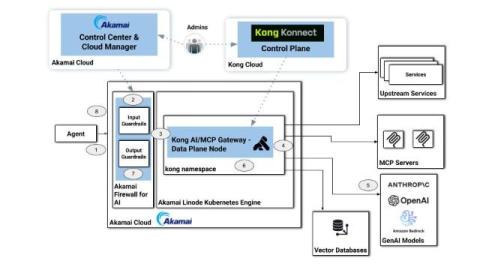
Building Secure AI Agents with Kong's MCP Proxy and Volcano SDK

Modern AI applications are no longer just about sending prompts to an LLM and returning text. As soon as AI systems need to interact with real business data, internal APIs, or operational workflows, the problem becomes one of orchestration, security, and control. The challenge is to build secure AI agents without embedding fragile logic or exposing sensitive systems directly to a model. This is where a layered architecture using Volcano SDK, DataKit, and Kong MCP Proxy becomes compelling.

Best Practices for AI in CI/CD QA Pipelines

AI transforms CI/CD testing from reactive bug detection into proactive quality assurance that accelerates release cycles while improving software reliability. Start embedding AI into your testing workflows now because teams that wait will struggle to match the velocity of competitors who already have. Continuous integration and continuous deployment pipelines have become the backbone of modern software delivery.

Build Agentic Workflows: Expose API Orchestration as MCP Tools with Kong AI Gateway

Learn how to expose an API orchestration workflow as an MCP server using Kong AI Gateway, configure semantic guardrails, and build an agent with the Volcano SDK. We onboard GPT-4 behind /llm, orchestrate with DataKit, and debug MCP tools in Insomnia—end-to-end without adding server code.

Can We Still Trust the Code? #speedscale #qualityassurance #digitaltwin #trust #devops

The "Velocity Gap" is real. AI like Claude and GitHub Copilot are pumping out code faster than ever, but there’s a catch: Engineers don't trust it yet. We’re moving away from the old days of "clicking around" in a test environment, but how do we verify code at the speed of light? Ken breaks down why the future of QA isn't just "testing," it’s simulation. Video collab with @ScottMooreConsultingLLC Learn More: speedscale.com.

A Developer's Guide to MCP Servers: Bridging AI's Knowledge Gaps

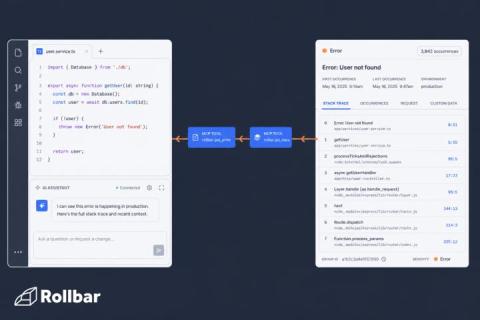
Have you ever asked an AI assistant to generate code for a framework it doesn't quite understand? Maybe it produces something that looks right, but the syntax is slightly off, or it uses deprecated patterns. The AI is working hard, but it lacks the specific context it needs to truly help you. The Model Context Protocol (MCP) was designed to bridge this knowledge gap by giving AI assistants access to domain-specific knowledge and capabilities they don't have built in.

Multi-Node Training with ClearML

Orchestrating distributed AI workloads Distributed (multi-node) training has become a requirement rather than an optimization for many modern AI workloads. As model sizes grow, datasets expand, and training timelines tighten, teams increasingly rely on multiple machines, often with multiple GPUs each, to complete training efficiently.