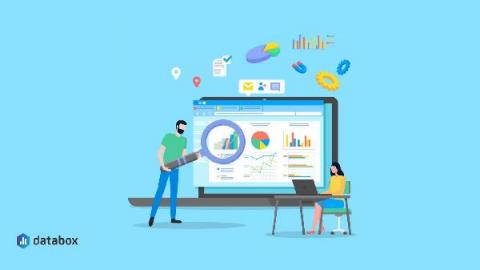
HubSpot Reporting: How to Use HubSpot to Build Better Reports for Your Department
Want to supercharge your HubSpot reporting? This article covers everything you need to know on how to make it simpler and more efficient.


Syslog is a protocol that allows you to transmit and receive notifications in a predefined format from various network devices. Timestamps, event messages, severity, host IP addresses, diagnostics, and other information are included in the messages. It may transmit a range of severity levels, including level 0, which is an emergency, level 5, which is a warning, System Unstable, critical, and levels 6 and 7, which are Informational and Debugging.
Logging is used to track events that happen when an application runs. Logging calls are added to application code to record or log the events and errors that occur during program execution. In Python, the logging module is used to log such events and errors. An event can be described by a message and can optionally contain data specific to the event. Events also have a level or severity assigned by the developer. Logging is very useful for debugging and for tracking any required information.
Strings are a fundamental data type in most modern general-purpose programming languages. In Java, strings are defined as character sequences and are represented as immutable objects of the class java.lang.String which contains various constructors and methods for creating and manipulating strings . Below is an example of the string literal "rollbar" being assigned to two different variables a and b which both reference the same (automatically interned) String object.
Few lines of code, no matter how great your development team is, run at peak performance when they're originally developed. To discover the most effective technique to make code run quicker, it must be evaluated, debugged, and reviewed. How can software engineers and quality assurance engineers ensure that their code is fast, efficient, and ultimately valuable? The approach is to evaluate an application's code and discover and resolve performance bottlenecks using code profiling.
Enterprise Integration Platform as a service (EiPaaS) is commonly used to describe a suite of cloud-based tools and services that are designed to support enterprise-grade integration strategy and initiatives. The hallmarks of EiPaaS products are ease-of-use, standardization and pre-built modules such as connection endpoints (usually API-based, to connect to a business application like CRM or ERP), automation flow builder and error handler.