Systems | Development | Analytics | API | Testing

Designing Your Virtual Test Team

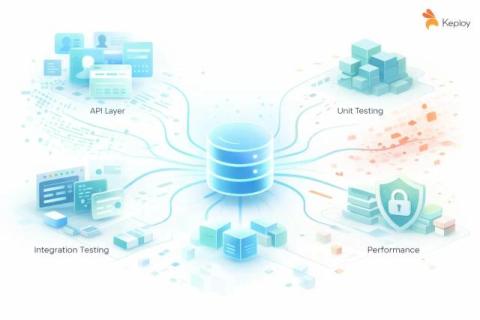
As organizations explore more advanced uses of agentic testing, a compelling vision emerges: a modular virtual test team composed of AI agents, each playing a focused role like Test Architect, Test Designer, Executor, and Summary Agent. While still early in real-world adoption, this model offers a way to coordinate intelligence at scale, with humans guiding the system and autonomy granted based on task risk and maturity.

A Complete Guide to Network Security Testing for Enterprises (2025)

‍ In today’s connected world, every enterprise depends on networks- from internal servers and employee devices to cloud platforms and hybrid systems. However, as these networks grow in size and complexity, they become prime targets for cybercriminals. By 2025, cybercrime will cost businesses $10.5 trillion annually, making it one of the most significant economic risks worldwide.

Autonomous Data Warehouse: AI-Driven Design to Delivery

Enterprise data warehouses face a fundamental challenge. For decades, organizations treated them as static projects—build once, maintain constantly, rebuild when requirements change. As data volumes surge and business needs accelerate, this approach creates bottlenecks. Organizations need autonomous data warehouses: self-sustaining ecosystems that adapt and evolve with minimal manual intervention.

AS/400 & Legacy ERP Modernization with REST API Generators

Modernizing AS/400 systems and legacy ERP platforms is no longer optional - it’s essential for businesses to stay competitive. These systems, while reliable, struggle to meet modern demands like real-time data access, cloud integration, and mobile compatibility. The solution? REST API generators. REST API generators allow businesses to connect outdated systems with modern applications without overhauling the entire infrastructure.

NodeSource Joins OpenJS Foundation Partner Program to Support Security for Users of Older Node.js Versions

We’re excited to announce that NodeSource has joined the OpenJS Foundation’s Ecosystem Sustainability Program (ESP), a strategic partnership designed to sustain the health and reliability of the JavaScript ecosystem. Through the ESP, NodeSource will help provide security support for organizations running older, unsupported versions of Node.js, giving teams more time and flexibility to transition to newer releases while maintaining a secure posture.

An introduction to Kotlin Sealed Class

Sealed classes are a special kind of class in Kotlin, used to create restricted hierachies — where the full list of sub-classes is strictly limited, and known in advance. This is particularly useful when we want to enhance the power of Kotlin’s when statement, model a type that has a fixed set of possible variations, or represent a fixed group of states or outcomes (such as network responses, UI states and form validations).

Introducing New MCP Support Across the Entire Konnect Platform

If you’ve been following Kong, you know that Kong was the first in the API platform space to introduce an enterprise-grade AI Gateway for LLM workloads. Today, we’ve also introduced a new enterprise-grade MCP Gateway to ensure that you can roll out production-ready MCP deployments. But we are focused on more than just the Gateway. Today, we’re excited to announce additional MCP workflow support in the Konnect Developer Portal and a brand new MCP integration solution, the MCP Composer.

What Is Grey Box Testing? (Techniques & Example)

With software applications growing increasingly complex, the way we test them to guarantee reliability and security must also increase accordingly. Among the many types of testing available, Grey Box Testing stands out as a hybrid method that presents us with a balanced perspective of insights from both black box and white box testing. It doesn`t matter if you’re a developer, QA engineer, or someone new to testing; grey box testing is important to everyone in today’s technological landscape.

The True Cost of Kafka Replication

Kafka cluster-to-cluster data replication is critical to many use cases: disaster recovery (DR), cloud or data center migration, testing applications with production-like data, and multi-region data distribution. Easy replication of data between clusters: The business case is clear, but the cost model is not. Some solutions appear free but impose heavy operational burden.