Systems | Development | Analytics | API | Testing

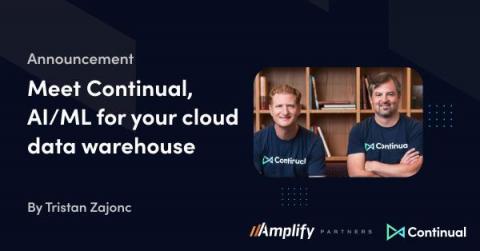
Announcing Our $4M Seed and Continual Public Beta

Today we’re excited to announce the public beta launch of Continual, the first operational AI platform built specifically for modern data teams and the modern data stack. We’re also announcing our $4M Series Seed, led by Amplify Partners, and joined by Illuminate Ventures, Wayfinder, DCF, and Essence, as well as new partnerships with Snowflake and dbt Labs.


What Is Log4Shell? The Log4j Vulnerability Explained

A new vulnerability that impacts devices and applications that use Java has been identified in Log4j, the open-source Apache logging library. Known as Log4Shell, the flaw is the most significant security vulnerability currently on the internet, with a severity score of 10-out-of-10. Fortunately, Perforce static analysis and SAST tools — Helix QAC and Klocwork — can help.

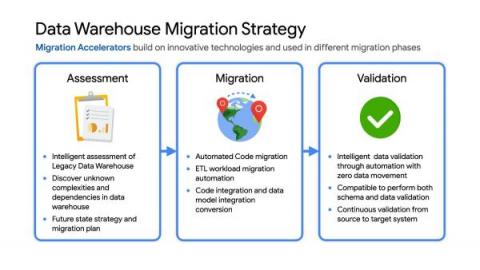
How to migrate an on-premises data warehouse to BigQuery on Google Cloud

Data teams across companies have continuous challenges of consolidating data, processing it and making it useful. They deal with challenges such as a mixture of multiple ETL jobs, long ETL windows capacity-bound on-premise data warehouses and ever-increasing demands from users. They also need to make sure that the downstream requirements of ML, reporting and analytics are met with the data processing.

4 Government Technology Trends to Watch For in 2022

As a new calendar year approaches, public sector CIOs and IT leaders are preparing for another year of change in their technology stack and its role in accomplishing their mission. The last two years have brought immense change and shifting imperatives to the public sector. Perhaps one of the most impactful is the drastic acceleration of digitization initiatives.

Unlocking Data Literacy Part 2: Building a Training Program

As we head into the holidays, there’s no better time to talk about bringing people together. And there’s no better way to bring employees together within a company aspiring to be data-driven than with a data literacy program. What data analytics processes should your organization put into place to increase data literacy? It all starts with establishing a training program to empower your people to work with data, regardless of their level of expertise.

What is Amazon Redshift Spectrum?

Amazon S3 (Simple Storage Service) has been around since 2006. Most use this scalable, cloud-based service for archiving and backing up data. Within 10 years of its birth, S3 stored over 2 trillion objects, each up to 5 terabytes in size. Enterprises value their data as something worth preserving. But much of this data lies inert, in “cold” data lakes, unavailable for analysis. Also called “dark data”, it can hold key insights for enterprises.

Redshift Join: How to use Redshift's Join Clause

Redshift’s JOIN clause is perhaps the second most important clause after SELECT clause, and it is used even more ubiquitously, considering how interconnected a typical application database’s tables are. Due to that connectivity between datasets, data developers require many joins to collect and process all the data points involved in most use cases. Unfortunately, as the number of tables you’re joining in grows, so does the sloth of your query.

What Are The Best ETL Tools For Vertica?

Vertica claims to offer the "most advanced unified analytical warehouse" in the world, providing actionable data insights you can't find anywhere else. The truth is, like any data warehouse, Vertica is only as good as the data you put into it. Moving data to Vertica can be a headache for organizations without a data engineering team. Data might live in various locations — transactional databases, relational databases, customer relationship management (CRM) systems, you name it.

PostgreSQL to Amazon Redshift: 4 Ways to Replicate Your Data

PostgreSQL is the preferred platform of millions of developers around the world. The open-source tool is one of the most powerful databases on the planet, with the ability to handle sophisticated analytical workloads and high levels of concurrency. That makes PostgreSQL (also called Postgres) a popular DB for scientific research and AI/ML projects. It’s also a popular production database for data-driven companies in every industry. But no database is perfect.