Systems | Development | Analytics | API | Testing

What We Learned Hosting a Finance Breakfast in Prague

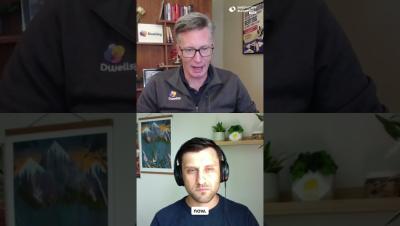
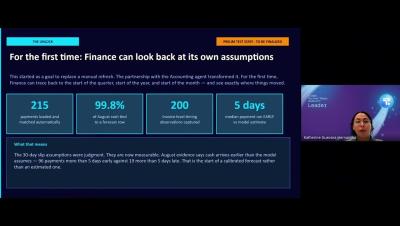
Earlier this year we started asking a simple question to finance leaders we met at events, on calls, and in roundtables: where do you actually start with AI in finance? The answers were consistent enough that we decided to do something about it. We invited 30 CFOs, finance directors, and finance managers to a business breakfast at our Prague office. A morning with peers who are all trying to answer the same question: where do I actually start?

Playwright Flaky Tests: The 2026 Fix Playbook

Five diagnostic patterns. One decision tree. A senior practitioner's triage playbook for Playwright flakiness in 2026. Flakiness is architectural, not framework-borne: Almost every flake traces back to async state, locator drift, session pollution, environment variance, or AI-agent non-determinism — not to Playwright itself.

Resource Governance and GPU Quota Enforcement Across AI Teams

Resource governance is primarily an operational discipline, but it has direct security implications that are usually overlooked. This post covers what those implications are, what Kubernetes provides natively, where it falls short for AI workloads, and how ClearML addresses both dimensions. This is the third post in our four-part series on Kubernetes Security for Enterprise AI Environments.

Quality People: From Scripts to Harnesses, the Evolution of Agentic QA

Play Quality People - Huy Tieu: The Evolution of Agentic QA: From scripts to Harnesses 17: 18 A conversation with Huy Tieu, Senior Product Manager at Katalon, on why the scripted testing model broke, what replaces it, and the one experiment every QA leader should run this week. The term "Agentic QA" is everywhere in 2026. Gartner predicts 40% of enterprise applications will feature task-specific AI agents by year's end, up from under 5% in 2025.

Data Products for Qlik Analytics - Data Quality -Semantic Types - Part 5

In this video, we dive into how Click Data Products combine Data Quality, Semantic Types, and business context to create trusted, scalable, and reusable data assets. We explore how semantic types in Qlik help classify and validate data using meaningful business definitions — improving consistency, discoverability, and confidence in analytics and AI-driven insights.

Beyond API management with DreamFactory | Dreamfactory

API managers are often used to expose REST APIs to an internal or external group of developers. An internal group of enterprise developers might use a catalog of API services as a starting point for software development projects. An external group of partners might use the APIs for integration with their backend systems. In some cases, partners might use the APIs to purchase goods, services, or information.