Systems | Development | Analytics | API | Testing

On-Call Oasis: Creating a Peaceful Experience, Especially During the Holidays

Kong Konnect is Kong’s infrastructural SaaS solution. We run the control planes and API management applications for the data planes (API gateway and mesh) that are run by our customers to power their APIs. Some of the most critical traffic in the world goes through these data planes. The criticality of Konnect and therefore our customer’s uptime expectations of Konnect are very high.

Kubernetes vs Docker: 7 Key Differences

It’s impossible to learn about containerization without hearing about Docker and Kubernetes. These two tools together dominate the world of containers, both being the de facto standard in what they each do. When you’re first getting started learning about containers, it can be quite a challenge to figure out the differences between these two tools.

Testing Kubernetes Ingress with Production Traffic

Kubernetes is an incredibly powerful solution, but testing the Kubernetes Ingress resources themselves can prove to be quite tricky. This can lead to significant frustration for developers – bugs can pop up in production that weren’t caught during testing, workflows that make sense on paper might fail in practice, and so forth.

Konnect Evolved: Declarative API Management in Kubernetes with Kong Gateway Operator

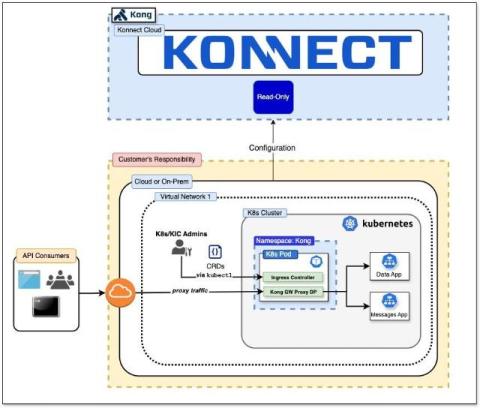
Konnect, the robust API management platform, is evolving to embrace the declarative power of Kubernetes. In this demo-driven talk, we’ll delve into how Konnect now leverages Kubernetes as the single source of truth for its configuration, ushering in a new era of simplified API gateway management. See firsthand how this shift enables you to define every aspect of your API infrastructure—from gateways and upstream services to plugins and consumer management—using intuitive Kubernetes manifests.

Simplifying Docker Compose Configurations with Aliases

When building applications with Docker Compose, it's common to encounter duplicate configurations across services, especially as projects grow and configurations become more complex. The benefits of using aliases in Docker Compose are crucial in this scenario. Docker Compose aliases provide a way to streamline this setup, reduce redundancy, and simplify logging configuration.

Build and Deploy Kubernetes Applications with Skaffold

Skaffold is a command line tool that facilitates continuous development by streamlining the workflow for building, pushing, and deploying Kubernetes applications. Skaffold handles the complexities of Kubernetes deployments, allowing developers to focus on local application iteration while managing deployments efficiently. Get started with our tutorial.

Docker Containers: Enabling Ssl For Secure Databases

Security is critical for any application, especially when dealing with sensitive data like financial records or user information. Databases such as MongoDB and PostgreSQL communicate over the network, making them vulnerable to interception. SSL (Secure Sockets Layer) encrypts the communication between the client and the database server to prevent data exposure. This encryption ensures that: 1. Data Integrity: No third party can modify the data in transit. 2.

Streamlining Your Kubernetes Development Environment: A Comprehensive Guide

Kubernetes has revolutionized how modern applications are built, deployed, and scaled. However, due to its complexity, managing a Kubernetes development environment can sometimes feel overwhelming for developers. Utilizing a cloud environment can simplify Kubernetes development by providing better scalability, manageability of dependencies, and a more consistent development experience across various cloud providers.

Kubernetes Load Testing: How JMeter and Speedscale Compare

At some point, your development team may be considering implementing load testing (also known as stress testing) as part of your software testing process. Load testing validates that your web app is able to withstand a large number of simultaneous users, decreasing the chance that any traffic spikes will bring down your services once deployed. These stress tests can be highly granular, giving you the opportunity to test run virtually unlimited strategies before they are set into the wild.