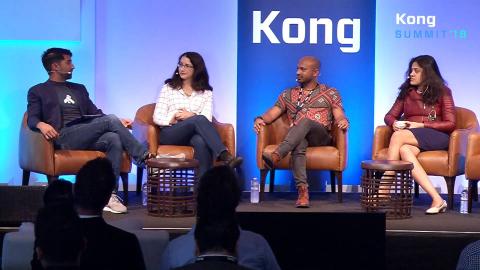
Serverless and event-driven computing are gaining traction, providing cost savings in the cloud and more efficient resource utilization on premise. Watch this talk recording to hear Kong CTO Marco Palladino moderate a panel discussion with industry leaders about the rise of serverless, its interactions with other cloud-native technologies, the challenges of implementing it, and where the field is headed in the future.
A popular term emerging from the software industry over the last few years is serverless computing, more commonly referred to as just “serverless”. So what does it mean? In its simplest form, a serverless architecture is a computing model where a service provider dynamically manages the allocation of computing resources based on a Service Level Agreement (SLA), provisioning and running resources only for the time needed and without requiring end-user involvement.
Recently I found myself in a predicament that many of you can relate to, trying to update an aging application that has become too difficult to manage and too costly to continue operating. As we started to talk about what to do, we concluded it was time to start decomposing that application into smaller more manageable pieces.