Systems | Development | Analytics | API | Testing

The Data Differentiator: Vanguard's Playbook for AI-Ready Data

Semantic layers and ontologies have moved from nice-to-have data modeling tools to the foundational engine required for enterprise AI. In this episode, Raman Tallamraju, Senior Director and Head of Enterprise Data Architecture and Engineering at Vanguard, breaks down how Vanguard is architecting its AI semantic layer to turn scattered institutional knowledge into reliable, agent-ready context. He shares why autonomous agents expose decades of hidden data debt, how to bridge domain-specific definitions like clients versus prospects, and how to balance building a unified semantic layer with a pragmatic, federated data operating model.

The AI Code Verification Crisis: Meet AURA, the platform built to solve it

AI didn't remove the release bottleneck, it moved it downstream. Code volume exploded, verification didn't. The old QA model isn't broken, it's outgrown: 80% of engineering teams have already traced a production incident to AI-generated code. AURA is Sauce Labs' answer, the only full-lifecycle release assurance platform built to close the gap. It continuously verifies every release against business intent, authoring, running, and regenerating tests in an autonomous learning loop, with humans in control.

What's New in DreamFactory 7.7 | Agents, API Builder, Schema Contracts

DreamFactory 7.7 is out. Agents have owners. API Builder is new. Schema Contracts lock the shape. The admin console is new. Four things that shipped: Agent governance. Every agent has a human owner, a role, and a key that expires in four hours. Deactivate the owner and the agent stops. API Builder. Design the endpoint the app actually wants. Custom paths, shaped responses, on services you already have. Open source, in every edition.

Your Multi-Agent System Is Only as Reliable as Its Context Layer

You've mapped the architecture. You know your agents need to retrieve context from external tools, coordinate with other agents, and propagate mutations through your systems. The model logic is solid. What you haven't fully solved is what sits between those agents and everything they're trying to reach. That's the gap Kong was built to close. Multi-agent workflows live and die on context.

From Intent to Data Product: Pipelines, Agents & MCP

The challenge for most data teams isn’t a lack of ideas—it’s the time it takes to turn those ideas into something usable. In this session, Steffen Bischoff, Chief Architect Data at Qlik, follows a single dataset from a core system through its entire journey to becoming a governed data product. You’ll see pipelines created by describing intent instead of writing code, versioned in Git, then curated, quality-checked, and documented with the help of specialized agents. From there, the data product is made available to the AI tool of your choice through the Qlik MCP Server.

10 Best API Monitoring Tools in 2026 (Free and Paid)

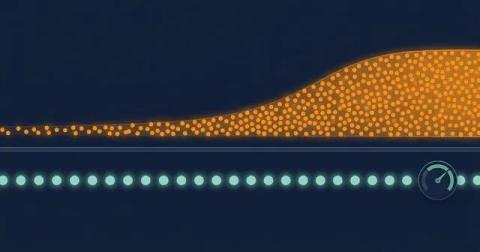
Is Your Infrastructure Ready for Global Traffic Spikes? Unexpected load surges can disrupt your services. With LoadFocus’s cutting-edge Load Testing solutions, simulate real-world traffic from multiple global locations in a single test. Our advanced engine dynamically upscales and downscales virtual users in real time, delivering comprehensive reports that empower you to identify and resolve performance bottlenecks before they affect your users.

Vibe Coding to Production: Building AI Apps That Actually Scale

Now that AI coding tools have put development capabilities into more hands, prototypes are becoming business-critical applications almost overnight. Shanea Leven sees an opportunity for a new generation of builders, provided the infrastructure around their applications keeps pace. Shanea explains how organizations can give developers and new technical employees room to build while maintaining the standards required for enterprise software..