

Systems | Development | Analytics | API | Testing

Why API Security Is Foundational to AI Security (Akamai Study)

Secure AI starts with securing the APIs underneath it. This session breaks down why APIs and MCPs are the control plane for AI apps and agents, where unmanaged API risk hides, and how security and platform teams can improve visibility, posture, runtime protection, and governance across production environments. KEY TAKEAWAYS TIMESTAMPS.


Building With ARIA: From Plain English to EDI Flows

ARIA is an AI Agent that has full knowledge of the Astera ecosystem. Sudais (Growth Strategist) sits down with Hasham Qazi (AI Product Specialist), to talk about why, and how that single agent, ARIA, builds data flows, workflows, and EDI pipelines from plain-language prompts. Hasham walks through a real use case, building an EDI flow from a file you hand to the agent, and explains what ARIA does when your prompt has gaps, how it checks its own work, and where it's heading next.

What IT Buyers Need to Know Before a Mainframe Refresh

Most mainframe storage refreshes begin with a notice. A support statement gets revised, a lifecycle date is published, a lease comes due, or a capacity report shows the estate crossing a threshold two years earlier than anyone planned for. A purchase that had been sitting comfortably in a future budget cycle now has to close in this one. Under deadline pressure, the instinct is to buy the current generation of the platform you already run.

AI at Scale: Why Trust, Not the Model, Decides Who Wins

Every AI conversation eventually turns into a model conversation: which one is fastest, which one hallucinates least, which one your competitors are already using. Three recent episodes of The Data and AI Chief, hosted by ThoughtSpot's Chief Data and AI Strategy Officer Cindi Howson, make a different case entirely about what it takes to scale AI in the enterprise.

Performance Considerations with Offset and Cursor Pagination in Plain PHP and Doctrine ORM

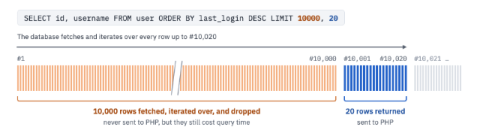
Displaying a list of items from the database is probably the most common functionality built for web applications. This is where pagination with LIMIT clause comes into play, which is most likely what you learned to use. This pattern is called offset pagination. In this post I am going to contrast it with cursor pagination and the performance considerations that come with the choice of pagination algorithm. Examples are with Plain PHP and Doctrine ORM 3.7, which ships a new CursorPaginator class.

AI-Native CI/CD Testing: Building Reliable Release Pipelines for AI Applications

Traditional CI/CD pipelines relied on determinism, assuming code produced an exact, repeatable output. Generative models and agentic workflows break this model. A single prompt edit or model checkpoint update can pass standard unit tests while causing silent regressions like truncated API payloads or missing parameters five steps downstream. To ship probabilistic AI reliably, engineering teams must redefine what counts as a passing test.

Structured Logging: A Complete Guide with Examples

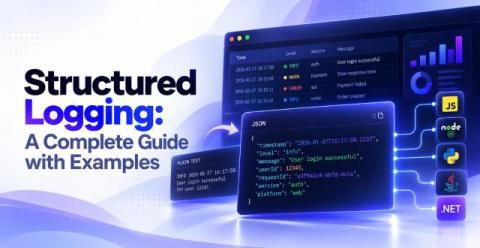
Plain-text logs are great if you want a simple explanation of how a function is performing or why a crash happened. But as your application grows, they become difficult to search and analyze. Structured logging makes production data easier to filter, correlate, and use across modern logging tools. This guide will give you the springboard to build structured logs effectively, showing you how to.

Feature Spotlight: Session-based Replay #trafficanalysis #api #developertools #techtutorial

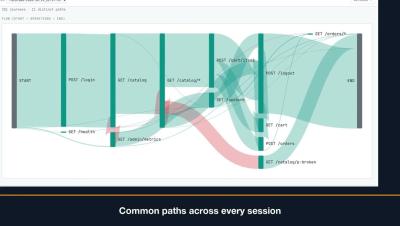
This video provides an overview of using Sessions to group traffic by actor credentials, track individual user journeys chronologically, and analyze request flows. It also covers how to check replay readiness for JWT sessions, replay recorded user journeys at their original pace, verify pass/fail counts, and save or sample specific sessions for easy sharing. Learn more: speedscale.com.

Feature Spotlight: Import & Export to Load Testing Tools #api #postman #openapi #loadtesting #devops

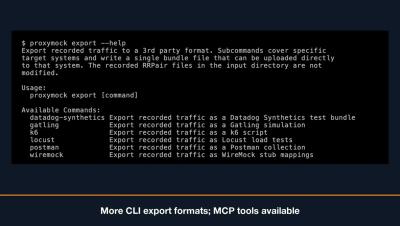
Proxymock allows you to import existing Postman collections, browser HAR files, and OpenAPI specifications to instantly create test requests and mock responses. You can also pull traffic directly from cloud storage buckets, or export your requests into load testing scripts for tools like K6, Gatling, and Locust. Coding agents can even manage these imports and exports using integrated MCP tools. Learn more: speedscale.com.