In this post, Nathaniel Reynolds, Associate Director of Informatics Architecture & DevOps at Moderna Therapeutics, talks about service mesh, removing limitations with open source, and how AI helps developers do more. No one can predict the future, but here’s a safe bet: in the next five to ten years, we aren’t going to have fewer applications. We’re going to have more. And that means connectivity requirements are going to get bigger and bigger over time.
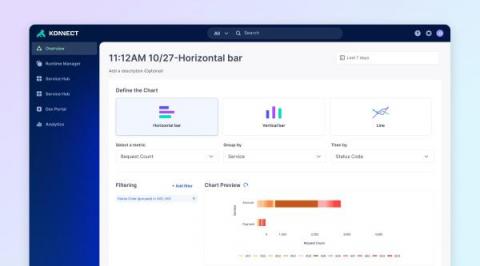
Since our last Kong Konnect monthly update, we’ve been hard at work to deliver some more powerful features in Kong Konnect, including consumer groups, dynamic client registration using Curity and Auth0, plugin ordering, and streamlined Docker runtime instance creation. Read on to learn what’s new in Kong Konnect.
We’re excited to announce the release of Kong Mesh and Kuma 2.1! In this release, we’re shipping the full suite of new and improved policies announced (and started) in 2.0. Additionally, we’re launching some more great UX improvements in the UI and a host of smaller fixes. In order to take advantage of the latest and greatest in service mesh, we strongly suggest upgrading to Kong Mesh 2.1. Upgrading is simple through kumactl or Helm.
Viktor Gamov also contributed to this post. In recent decades it’s become common for communication between backend services to employ HTTP APIs with JSON payloads. Many HTTP APIs adhere (or at least aspire) to REST Principles, though many fall into a category we’ll call "REST-like".
The joy (and sometimes woe) of working in technology is that we’re forever learning. The software stack is constantly changing, so innovators come to embrace a lifetime of learning. In this ever-evolving IT landscape, measurable skills have become the global currency for IT professionals. In this post, we’ll talk about the selection of courses offered through Kong Academy and the Kong Certification program, as well the benefits of microcredentials for employers and employees.