Systems | Development | Analytics | API | Testing

Supercharge your LLM Using Production Data Context

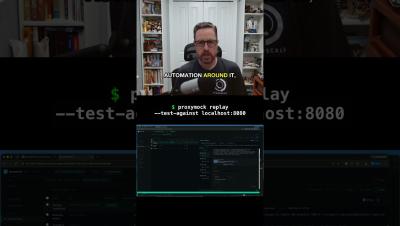
Are your LLM coding agents (like Cursor or Claude Code) hallucinating fixes because they don't know what's actually happening in production? In this video, Matt from Speedscale shows you how to bridge the gap between your local IDE and live production traffic using the Model Context Protocol (MCP). Most observability tools just give you telemetry. Speedscale’s MCP server gives your agent the "inner workings" of actual API calls and payloads, so it can check its assumptions against reality. No more "vibe-coding" and hoping it works; let your agent find the 500 errors and rate limits for you.

The Analyst Consensus: Why Strategic Partnerships Are Reshaping Industrial AI

When you look at the pace of change in industrial AI, one truth stands out: no single company can do it alone. The complexity of power grids, transportation networks, and manufacturing systems demands collaboration — and that’s exactly what analysts are watching closely.

Software Deployment In 2026: Checklist & Strategies That Work

Software deployment looks simple on paper, but in real projects, it’s where most failures show up. Even stable code can break when deployment isn’t planned well. In 2026, software deployment is no longer just about pushing code – it’s about reliability, speed, and control. Let’s explore how modern teams can deploy smarter, faster, and safer in 2026.

AI in Action: Powering the Future of Testing | Xray Webinar

A quick overview of Xray Test Management - cutting-edge test management app for Jira. Xray is the leading Quality Assurance and Test Management app for Jira. More than 4.5 million testers, developers and QA managers trust Xray to manage 100+ million test cases each month. Xray is a mission-critical tool at over 5,000 companies in 70 countries, including 137 of the Global 500 like BMW, Samsung and Airbus.

AI Agent with Strands SDK, Kong AI/MCP Gateway & Amazon Bedrock

In one of our posts, Kong AI/MCP Gateway and Kong MCP Server technical breakdown, we described the new capabilities added to Kong AI Gateway to support MCP (Model Context Protocol). The post focused exclusively on consuming MCP server and MCP tools through Kong MCP Gateway. Now, it's time to check how an AI agent can leverage the AI and MCP infrastructure exposed and protected by Kong AI/MCP Gateway.

Qlik 2026 Trends - Powering the Future of AI

Somehow, another year has passed and we’re back again to deliver our Trends Outlook for 2026. As Qlik’s first milestone of the year, it’s a busy but exciting time that hugely energizes me after the holiday break. We weren’t short of inspiration. The world has given us a far from a blank canvas on which to illustrate our Trends and in particular, conversations around AI have firmly evolved from future-gazing to wrestling with the formula for harnessing its power.

AI in State and Local Government: Impact Starts with Process, Not Hype

Why “standalone AI” falls short AI works best when embedded in a process Guardrails are not a limitation—they’re an enabler Process-driven AI in action How leaders should be thinking about AI now Artificial intelligence is no longer optional in state and local government—it’s essential for meeting public expectations amid staffing shortages and budget constraints. AI is showing up across agencies and programs.

The new Ably dashboard: understand your realtime system in motion

When you’re building realtime systems, blind spots slow you down. The new dashboard gives developers self-serve visibility into everything happening inside their apps, from high-level usage to individual connections, channels and messages. No setup. No external tools. Just open your browser and observe your data in motion.

How to Turn SQL Server Stored Procedures into REST APIs: Complete Guide

Enterprises have invested decades of development effort into SQL Server stored procedures. These procedures contain critical business logic—validation rules, complex calculations, transaction handling, reporting queries—that applications need to access. But stored procedures weren't designed for modern API-driven architectures.