Mailchimp
Not subscribed to OpsMatters Newsletter


Introduction Creating complex performance testing scenarios in JMeter can be a complicated but necessary problem you will encounter as you build tests to mirror real user behaviour in your testing. There are many add-ins that can support you in the creation of these scenarios. Which is good if they do what you want them to do.
With increasing popularity among API Gateways, which provides authentication, rate-limiting and access control between applications that expose their APIs and the consumer of the APIs are the bedrock of API infrastructure. Simple architecture which bundles API related functionality inside a single component provides load balancing, caching and ability to scale to ensure high availability.
The introduction of AI into products and services – across all sectors – is creating new capabilities at a scale that software developers could never have dreamed of just a decade ago. But this development is not just about the tech.
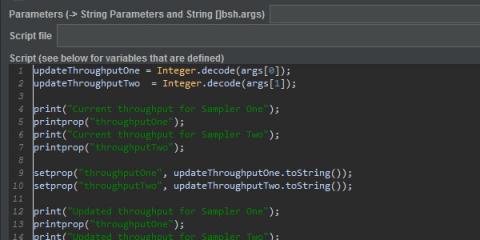
Introduction The Beanshell Interpreter in JMeter can act as a server which as stated in the JMeter documentation is accessible by telnet or http. So what, I hear you say, well this can be useful and we will explore some of these uses in this Blog Post. Before we move on the definition of a Beanshell can be found on the official Web Site.
This blog post is a tutorial for writing Gatling scripts to load test web applications. It follows our first getting started with Gatling simulation scripts article. The application under test is a fake e-commerce. We are going to create a Virtual User that browses articles in this shop. To create a dynamic load test we will cover several topics.
Augmented analytics is when you take what was traditionally a very manual workflow and automate it. This gives you the ability to analyze data far more rapidly and to package up changes for humans to interpret. Essentially you’re augmenting a human experience, so rather than spending all your time looking for a needle in the haystack, the machine finds the needle and gives it to you.
For more than 70 years, EBSCO has supported research at private and public institutions, including libraries, universities, hospitals, and government organizations. One of the reasons that customers have continued to rely upon us over the decades is because we actively innovate and adapt new technologies to give customers access to the growing pool of digital resources in the information age.