What's New in ThoughtSpot's Latest Release

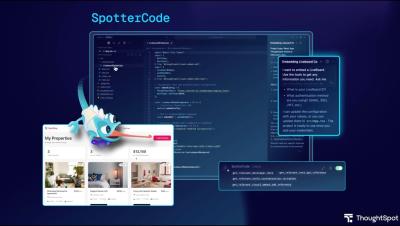
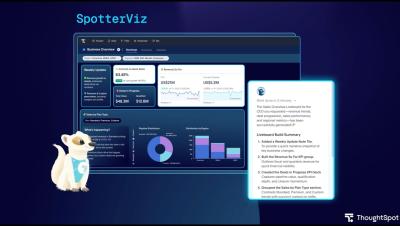
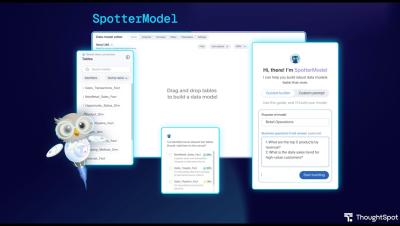
Check out what’s new in ThoughtSpot’s latest release! Access data literacy skills within Spotter, and have your agent explain the data model. Now also offering contextual suggestions for questions and additional details on calculations. KPI alerts can now also trigger only for specific attributes and values, enabling more focused and contextual decision-making. Fully customize your user interface by using String IDs for custom system text in white-labeled scenarios.

Connect Workday to Your BI Tools with Simba Driver from insightsoftware

Looking to streamline data access from Workday? The Simba Workday ODBC/JDBC Driver from insightsoftware makes it easy to connect Workday data to your preferred BI and analytics tools — including Power BI, Tableau, Qlik, and more. Enable seamless data access Build dashboards without manual exports Improve decision-making with real-time insights Whether you’re a financial analyst, data engineer, or IT leader, this driver empowers you to unlock the full value of your Workday data — securely and efficiently.

200+ Data Privacy Statistics: Fines, Laws, and Consumer Behavior

The digital landscape is changing. More and more, consumers are realising the importance of data privacy. This shift in mindset is something businesses must attune to if they hope to build strong relationships with their customers. The phasing out of third-party cookies by Google at the end of 2024 and global regulations like GDPR and CCPA tightening data collection mean companies that embed privacy as a core part of their operations have the most to gain.

What is Late-Arrival Percentage for ETL Data Pipelines and why it matters?

In data pipelines, timing is everything. When data doesn't arrive when expected, it can create ripples throughout your entire analytics ecosystem. Late-arriving data refers to information that reaches your data warehouse after the expected processing window has closed. The Late-Arrival Percentage for ETL pipelines measures the proportion of data that arrives behind schedule, directly impacting the reliability and usefulness of your business intelligence systems.

What is Data Completeness Index for ETL Data Pipelines and why it matters?

Data completeness in ETL pipelines refers to whether all expected data has been successfully processed without missing values or records. The Data Completeness Index (DCI) is a metric that quantifies the percentage of complete data fields in your ETL processes, helping organizations identify gaps that could lead to faulty analytics or business decisions. When your data completeness testing in ETL processes reveals a high DCI score, it indicates reliable data that stakeholders can confidently use.

Mastering Analytics for Offline Applications and Devices with Countly

At Countly, we’re passionate about empowering businesses and developers with analytics that work everywhere - even when the internet doesn’t. In a world where applications and devices don’t always stay connected, we’ve built robust capabilities to track user behavior and performance, no matter the scenario. From IoT gadgets in remote locations to industrial systems in secure facilities, we ensure you never miss a data point.

ChatGPT Made AI a Tool for Everyone - Now Data Infrastructure Needs to Catch Up

When ChatGPT entered the mainstream, it didn’t just change how people use artificial intelligence — it changed who gets to use it. By abstracting away the complexity and making the interface simple and intuitive, OpenAI opened the floodgates. Now, instead of AI being the exclusive domain of engineers and data scientists, it’s being actively explored by product managers, marketers, revenue operations leaders, and customer experience teams.

ETL Testing Tools for Modern Data Quality Assurance

In a modern data stack, reliability isn't optional, it's a requirement. Data teams are tasked with building pipelines that extract from dozens (sometimes hundreds) of disparate sources, transform data under strict business logic, and load it into analytics-ready destinations. But even the most well-architected ETL workflows can fail silently without rigorous testing.

ETL for LLMs to Build Context-Rich Pipelines for Generative AI

Large Language Models (LLMs) like GPT-4, Claude, and LLaMA have reshaped the way businesses think about intelligence, automation, and human-computer interaction. But the performance of an LLM hinges entirely on what powers it: data. And that data must be systematically collected, cleaned, enriched, and delivered—a task owned by the ETL (Extract, Transform, Load) pipeline.