Questions to Ask AI About Your Sales Pipeline and CRM Data

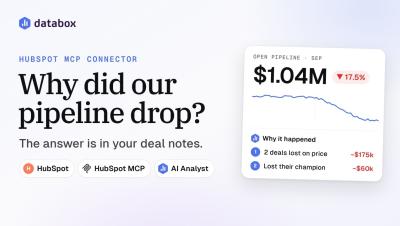
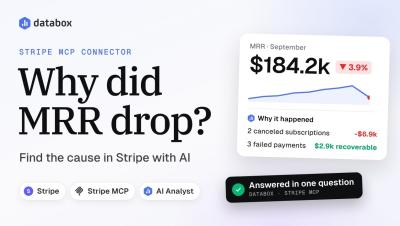
The right question returns a deal name, an owner, and a dollar value. The wrong one returns a framework about pipeline health. The difference is not the model, it’s how you ask. It’s 7:47am Monday. Your pipeline review starts at 8. You have thirteen minutes to find out which deals need attention, which reps are behind pace, and whether you’re actually going to hit the number this quarter.

5 Signs Your EPM Can't Scale With Your Growth

High-growth companies move fast. Headcount doubles. New markets open. Acquisitions close. And somewhere in the middle of all that momentum, your finance team is still manually stitching together spreadsheets, waiting on IT to refresh data, and running planning cycles that take longer than they should. The problem often isn’t your people, it’s your Enterprise Performance Management (EPM) system. The platform that served you well at $50M in revenue can become a serious liability at $200M.

Sustainability from the Boardroom to the Control Plane

The definition of sustainability is being re-written in the age of AI. Yes, the current discourse that focuses on green IT considerations, including resource efficiency, carbon accounting and water use, is necessary. But it is incomplete. Sustainability in the age of AI implies sustaining the long-term flourishing of people, businesses, societies, and planetary systems together, not just minimizing energy use or carbon.

The Last (and Longest) Mile of Apache Kafka Migrations: Client Migrations With KCP and Confluent Cloud Gateway

In a previous blog post in this series, we introduced Kafka Copy Paste (KCP), an open source CLI tool that automates the discovery, provisioning, and data migration steps of moving your Apache Kafka environment to Confluent Cloud. We walked through how KCP and Cluster Linking work together to reduce a process that traditionally took weeks to a matter of hours. At the end of that post, we hinted that automated client migration was coming soon. That day has arrived.

Agentic Analytics in Practice: How AI Moves from Answering Questions to Closing the Loop

I spent years building dashboards that nobody used. Not because they were bad dashboards — they were actually pretty good. Clean visualizations, real-time data, all the metrics leadership said they wanted. But here’s what I learned: the problem was never the dashboard. The problem was the gap between seeing what happened and doing something about it. You look at a dashboard. It doesn’t act.

Data & AI Anywhere: Mastering Digital Sovereignty with Cloudera

Hey, did you know?... Cloudera's "anywhere" approach means *you* get to choose and control where you deploy your data and AI. Continue watching to hear how we make that possible. In this video, learn how Cloudera helps organizations maintain comprehensive control over their most valuable assets through three critical pillars: Chapters.

Why Enterprise AI Can Get the Query Right and the Answer Wrong

Most teams deploying AI agents on their data are watching the wrong things. They check whether the query ran and whether the number looks plausible. When both checks pass, the agent gets credit for a correct answer, and the output flows into dashboards, decisions, and the next agent in the chain. There's a gap between those two checks and actual correctness, and it's where the expensive mistakes live. Getting to a correct answer requires more than a formally valid calculation.

On-Prem and Private Cloud Deployment Models for Analytics

Leadership keeps asking for more dashboards, faster answers, and tighter compliance. The data team hears a different message: do more with the same staff (or, fewer). That is where the difficulty evaluating on-prem and private cloud deployment models for corporate data analytics and visualization solutions starts to bite.