
Systems | Development | Analytics | API | Testing

Building Interactive Applications with Choreo WebSocket Services

In modern applications, real-time interactions have become the norm. Users demand real-time communication in apps like chat platforms, collaborative tools, live streaming services, and games. WebSocket APIs provide an effective means of creating interactive real-time apps by allowing persistent, bidirectional communication between the client and the server.

Everything You Need To Know About Api Testing

In the realm of software development, Application Programming Interfaces (APIs) serve as the backbone for communication between different software systems. As APIs become increasingly integral to modern applications, ensuring their reliability and functionality is paramount. One crucial aspect of this is testing API endpoints thoroughly. In this guide, we’ll delve into API endpoint testing, exploring its importance, best practices, and tools to streamline the process.

How Ai Code Is Transforming The Future Of Software Development

The world of software development is undergoing a huge transformation, due to the emergence of artificial intelligence (AI). AI-powered tools and methodologies are reshaping how we write, test, and deploy code, which is making our programming faster, more efficient, and more accessible. In this blog, we’ll explore the concept of code with AI, its applications, benefits, and its potential to redefine the future of technology. So, let’s dive in!

7 Best API Testing Tools of 2024

Today’s software testing trends show the growing demand for more efficient and automated API testing. Manual testing is not only time-intensive for internal testing teams, it can also lead to poor customer experiences. When manual testing processes cannot proactively discover issues, your customers may inevitably be the ones finding them. Many of the current test automation solutions today focus on the UI, while most API-level testing is still done manually.

Konnect Evolved: Declarative API Management in Kubernetes with Kong Gateway Operator

Konnect, the robust API management platform, is evolving to embrace the declarative power of Kubernetes. In this demo-driven talk, we’ll delve into how Konnect now leverages Kubernetes as the single source of truth for its configuration, ushering in a new era of simplified API gateway management. See firsthand how this shift enables you to define every aspect of your API infrastructure—from gateways and upstream services to plugins and consumer management—using intuitive Kubernetes manifests.

How To Use Assertions In Python Selenium For Testing

When writing test automation scripts in Selenium Python, verifying that the actual outcomes match the expected results is crucial. This is where assertions come into play. Assertions help ensure that your application is working as intended by checking specific conditions and halting execution if they fail. In this blog, we’ll break down the concept of assertions in Selenium Python, provide some easy-to-follow code examples, and explain how they can make your test scripts more robust.

Introducing Third-Party Service Integration for Choreo

We are excited to introduce a new feature in Choreo that provides the ability to register and consume third-party services through connections. This feature empowers developers to seamlessly integrate external services such as Twillio, Salesforce, etc. with their Choreo applications, opening up a world of possibilities for creating more robust and versatile applications.

What is a Demo Environment?

One of the most important aspects of a product is the ability to showcase its functionality. In the API space, it’s very important for a product to not just claim something, but to show that utility and use. One of the best ways to do this is through the use of a demo environment. A demo environment is a perfect method to surface a specific use case or example for users, showcasing functionality that is often tailored to a specific interest group.

EP13: First Principle Thinking for Architects

In this episode, Sanjiva and Asanka explore the power of first-principle thinking and why it’s a must-have approach for architects. They break down how this method helps tackle complex problems by focusing on fundamental truths rather than relying on assumptions or best practices. From root cause analysis to iterative refinement, they discuss how architects can apply first principles to design innovative and scalable solutions. Tune in to rethink your approach and elevate your architectural decision-making!

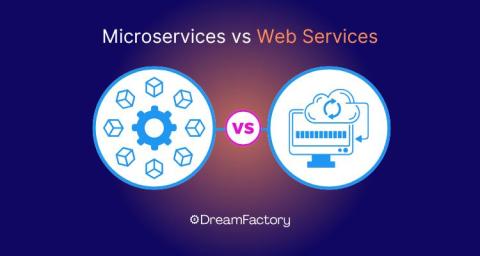
Microservices vs Web Services: Key Differences

In the early days of web application development, monolithic frontends and backends were perfectly fine. But the emergence of the cloud has changed expectations. Developers want to build applications that exchange information with APIs (Application Programming Interfaces). Business owners want faster development times. End users expect zero downtime. This new paradigm enabled the rise of service-oriented architecture (SOA) and, along with it, microservices and web services.