Systems | Development | Analytics | API | Testing

Modern Software Development For Today's Systems & Applications


How To Connect Legacy ERPs to Modern Applications
Research shows that legacy systems make up 31% of the technology in organizations. These are systems that might still provide value for your enterprise but are unable to interact with other software tools, rendering them almost useless for your digital transformation objectives. Many legacy systems are ERP systems that exist in data silos, incapable of integrating with the rest of your organization. In this article, we’ll show you how to connect legacy ERPs to modern applications.
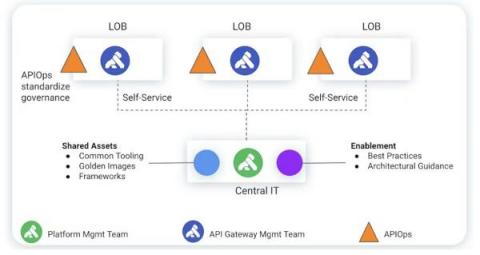
API Platform and Data Mesh: Why Bring Them Together
Enterprises are investing in data mesh initiatives to accelerate how decisions are made and to create novel experiences based on machine learning models. Similarly, enterprises are investing in API platform initiatives to productize business domains (or bounded contexts in domain-driven design parlance) as self-service digital assets that accelerate innovation and improve business agility. Both initiatives are typically run as separate work streams.


Building an API Monetization Stack
Join Matt as he answers the frequently asked questions regarding API Monetization like the components of a monetization stack and what technologies and methodologies your team should consider when developing an API Monetization strategy.

Quickly create performance and regression tests from a Postman collection
Speedscale is a Y-Combinator backed startup that helps Kubernetes engineering teams build more resilient and performant containerized apps. Unlike other tools, we use agents/sidecars to record and playback sanitized traffic that you see in prod. With Speedscale, engineers can simulate production conditions, generate load, and mock third party backends modeled after real traffic patterns.

Swagger Open Source Tooling Now Supports Latest OpenAPI Specification (OAS) 3.1
SmartBear continues commitment to widely used OpenAPI Specification and millions of Swagger users worldwide through their open source projects.

What's New in Kong Ingress Controller 2.10?
We’ve just shipped Kong Ingress Controller (KIC) 2.10! This release makes KIC easier to use. In this blog we’ll cover: You can read the CHANGELOG for full details, but for now, let’s focus on the highlights.

Explore What's New - Episode 4
Check out episode 4 in our SwaggerHub Explore monthly update series! In this episode, Frank and Temil walk through the importance of our latest features - query params for transaction filtering & the ability to execute API from transaction details.