Systems | Development | Analytics | API | Testing


Kong Builders Livestream - Local Kubernetes development with Kong, minikube, and kind

Kong Builders is the livestream series that takes our developer-focused toolsets and puts them on display in the best venue possible – building applications and connecting workloads. Join Viktor Gamov as he takes a hands-on, practitioner-focused approach to exploring Kong’s tools.

Downstream and Upstream Mutual TLS With an API Gateway

Like many developers and operations professionals, you may have had complicated experiences with security and certificates (encryption of the connection and authentication). Maybe so much so that you try to avoid working on them whenever possible. If you’re looking for a simpler way, Kong may be the answer. As with everything with Kong, the idea is to make things as lightweight as possible, including the complexity of setting up and maintaining certificate-based security.

What Makes a Good API | 6 Aspects That Make it Fit for Integration in 2022

There is hardly an IT application nowadays that doesn’t provide an API, which specifies how this application should interact with the rest of the IT ecosystem. So, it’s no wonder that IT staff even at large enterprises increasingly make use of APIs when they need to integrate multiple systems with each other, commonly new SaaS applications with the existing IT estate. At the same time, there are APIs and then there are APIs.

A Three-Step Guide to Insurance Transformation

The world of insurance has been one most heavily influenced by APIs and the API-first operating model. Today, insurance agencies can benefit from learning how the API-first operating model can enable your IT team to unlock data from legacy systems and more. Technology has left its imprint on the insurance industry, and now tools like APIs have created even more opportunities for success. With so much room for success, it is important to realizes the need for insurance transformation.

Building Your Own In-App Charts? Use Moesif Embedded Templates Instead!

Certain products can benefit from having real-time charts displayed within them. Whether it is an internal or external application, metrics truly come to life when they are displayed nicely. In the past, to display such graphics you would need to implement your own charting tool, map the data or metrics into the tool, and then maintain this implementation. Overall, it was a very inefficient and cumbersome way to display data visually within your applications.

A Developer's Guide to Continuous Performance Testing

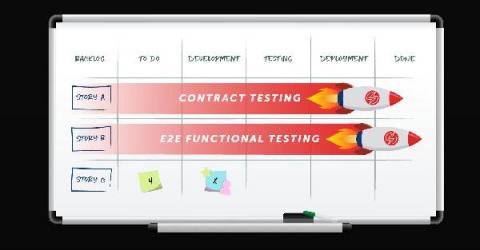
One of the most important phrases of DevOps practices is “Test early, test often.” It’s crucial to perform functional testing early with unit tests and integration tests. But it’s equally important to perform non-functional testing. That means you should have performance tests. As markets become more saturated with each passing day, you no longer have the luxury to postpone performance testing until all features are developed.

What is TTFHW?

TTFHW is not the most common acronym you’ll hear in the tech and product domain. Even though it’s not extremely common, it can be argued that it is one of the most important acronyms for companies trying to scoop up and deliver value to new users. TTFHW, or Time To First Hello World, is likely something you’ve already thought about. Many product-led enthusiasts refer to it as the customers’ “aha!” moment.

3 Ways to Extend Your AWS Capabilities in 2022

Amazon Web Services (AWS) has millions of customers, making it one of the most popular cloud platforms in the world. With over 200 services from data centers globally — compute, storage, databases, machine learning, artificial intelligence, data lakes, analytics, Internet of Things, etc. — AWS makes it easier for businesses to move applications to the cloud and streamline workflows. Still, many gaps exist in native AWS tools, which can limit your company’s AWS capabilities.

The Five Pillars of CIAM

Transforming customer experience is at the heart of digital transformation. Digital technologies are changing the game when it comes to customer interactions, with new rules and possibilities that were unimaginable only a few years ago. Customer identity and access management (CIAM) is a new field of identity and access management (IAM) that is fundamentally a component of digital customer experience.