Just two weeks ago, I shared the exciting news that Hitachi Vantara and Hitachi Consulting will unite in January to accelerate digital value creation for our customers and partners and unlock new synergies across the greater Hitachi Group. The news has been incredibly well received and we are excited by the positive response the announcement has generated around the world.
With the global increase in data breaches, like the biggest data fiasco of Facebook and the massive cyber attack on SingHealth’s database, the simple question of “Where is my data?” now requires answers that derive from the complex universe of data governance.
With the launch of Qlik Sense Business and enhancements to Qlik Sense Enterprise in our September 2019 release we have again underlined why Qlik, the largest independent data and analytics vendor in the market, is leading the 3rd generation of BI and analytics.
Imagine that you are an on-premises Talend customer, and your company has decided to move all of its operations to the cloud. They have licensed Talend Cloud and have tasked you with migrating your existing Talend projects and Jobs to this new product. What do you need to know to begin your migration to Talend Cloud?
Being able to quickly integrate disparate sources of data from the edge to the core is a de facto criterion for your digital transformation to succeed — whether that’s providing real-time answers for your business teams or delivering personalized customer experiences.
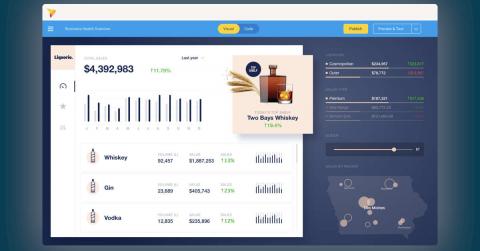
As a vendor of dashboards, I know it’s really important how people use them to effectively communicate their data to end-users. But I believe a well-designed dashboard is a rare thing.
In the past few years, we’ve seen rapid adoption of a new data analytics stack, based on cloud warehouses like Amazon Redshift, Google BigQuery and Snowflake. This stack has three layers: Data Integration, Modeling Layer and Application Layer.