Systems | Development | Analytics | API | Testing

Simplifying the API Acronym: Your Ultimate Guide to Application Programming Interfaces

What does ‘API’ stand for, and why is it essential in the tech world? API, short for Application Programming Interface or the API acronym, is a crucial component that enables different software programs to communicate with each other. This article is your guide to understanding APIs: from their basic definition to their architectures, and their role in shaping modern digital experiences.

Say hello to Ably Chat: A new product optimized for large-scale chat interactions

We’ve had the privilege of working with a wide range of customers including global retailers, CRM vendors, sports franchises, creators, entertainers, and broadcasters - from HubSpot and SportsBet, to 17Live and InvitePeople - providing them with reliable, scalable and low-latency chat. Ably Pub/Sub is already a fantastic fit for a variety of chat use cases.

Calling other APIs with DreamFactory

Integrating and calling other APIs is an important step in the development process. APIs allow different systems to communicate and share data, enabling developers to build more dynamic and feature-rich applications. Whether it's accessing third-party services, aggregating data from multiple sources, or automating workflows, the ability to effectively integrate and call other APIs is a key component of a successful software strategy.

Python Virtual Environment: A comparison of venv, pyvenv, pyenv, virtualenv, virtualenvwrapper, and pipenv

To maintain consistency and avoid challenges between different projects, you need to manage dependencies and isolate their project environments. Virtual environments solve this problem by allowing dependencies to be installed in isolated environments without affecting the Python installation system-wide. We'll compare venv, pyvenv, pyenv, virtualenv, virtualenvwrapper, and pipenv for creating isolated Python environments.

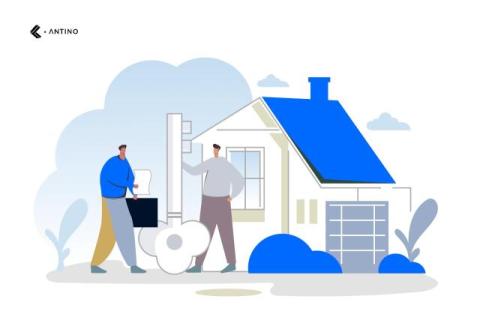
How to develop a Women's Fashion App like Shein - Antino

As the e-commerce industry continues to expand rapidly, projected to surge from 4,248 billion dollars to 12 trillion dollars by 2027, it's evident that the sector is continually growing. Retailers are also actively seeking avenues to tap into this flourishing sector, often emulating the success of leading e-commerce platforms through app cloning.

Introducing our new status page

We are thrilled to announce that we are transitioning from our legacy status page to a brand-new, upgraded one. This change is part of our ongoing commitment to provide Ably users with the best possible developer experience. Our legacy status page has served us well, but technology and customer needs are constantly evolving. We recognized the need for a platform that can keep pace with these changes and offer an improved experience.

Swift Machine Learning: Using Apple Core ML

A sub-discipline of artificial intelligence (AI), machine learning (ML) focuses on the development of algorithms to build systems capable of learning from, and making decisions based on, data. In iOS development, ML allows us to create applications that can identify patterns and make predictions, adapting a user’s experience by learning from their behaviour.

Building a CLI with Laravel Prompts

As Laravel web developers, we often need to build Artisan commands for our applications. But interacting with the console can sometimes feel a little cumbersome. Laravel Prompts is a package that aims to improve this experience by providing a simple approach to user-friendly forms in the console. In this article, we'll take a look at Laravel Prompts and some of its features that you can use. We'll then build a simple GitHub CLI client using Prompts to demonstrate how to use it in your applications.

Enhancing Resilience: Introducing Fallback Configurations in Kong Ingress Controller 3.2

As Kong Ingress Controller is used widely in the field, ensuring its reliable and resilient error handling is crucial to us. Kong Ingress Controller 3.2 introduces a Fallback Configuration feature, designed to make sure a single mistake made in your manifests doesn't halt the whole configuration update pipeline. In this User Call, we'll cover: The Need for the Feature: Understand the critical scenarios that highlighted the necessity for improved error-handling mechanisms.